

On 10 November 2021, incidentally also my Latvian name day, Mārtiņš, I held up a piece of wood with my name written on it for a photograph. It would fit into a corner at the back of our Land Rover Defender, keeping the cushions in place, adding storage and lifting out for access to the electrics. Finishing with a piece that did three jobs at once felt appropriate.
After roughly six months of work, our off-road camper was finished. The empty loading area had become somewhere we could sleep. Now we just needed a name, and somewhere to go.
So let me tell you about ‘The Firefox’.

The concept
We bought the Defender earlier that year. This 1999 Land Rover Defender 110 TD5 hardtop had been completely rebuilt on a galvanized chassis by LaRoTrade Holland. They had created a one-of-a-kind “Fire Edition”, with bright orange bodywork and black details. It was stunning, and the perfect vehicle to pursue a long-standing dream: to create a basic off-road camper of my own. Maybe, someday, this could take me through the interior of Iceland.
At my request, two expedition windows by Explore Glazing were added to the rear bodywork. Behind them was still an empty loading area: orange metal and wheel arches. Everything that would make it a camper had yet to be built. Additionally, we asked LaRo Trade to install an Eberspächer engine preheater and parking heater, along with a capable winch.
From there, I would take over with the camper conversion. The idea was simple. A small fridge, a water reservoir with a gravity-fed tap, basic electrics and L-shaped seating that could be turned into a bed. A cabinet with an oak countertop would run along one side, with seating opposite. No pop-up roof or permanently installed stove, as we could just use basic camping equipment. The conversion needed to withstand the driving conditions an off-road vehicle like this could encounter.
But since this was my very first camper conversion, putting the concept into practice was easier said than done. What followed was a fun conversion project with a lot to learn.
The conversion
First, I stripped out the interior and roof lining, then added soundproofing, insulation and a foundation of okoume plywood, with Armaflex insulation beneath it. The original lashing rings remained accessible for securing equipment, whenever needed.


By early July, the basic structure was taking shape and I could begin installing the electrical system. I installed a lithium camper battery, the main wiring and a Dometic CD30 compressor drawer fridge. The electrics would later disappear into an enclosure, accessible through a small hatch beneath the seating area. I then installed the camper lighting, which instantly made working late in the evening in the car much easier.

During this process, I turned one of the rooms in our apartment into a workspace. There I cut and shaped each panel, and finished each with several coats of black lacquer. The classic Land Rover Defender is infamous for the generous tolerances in its bodywork. It meant that every single piece of wood needed to be measured and cut to fit the exact position where it would be mounted.
Bit by bit, the orange bodywork disappeared behind the black plywood.
The oak countertop made the biggest visual difference. I cut a two-by-one-meter piece of oak into a suitable size with lids for the compartments below. Keeping the natural contours of one edge gave the top a classic look. I added some openings to accommodate the battery monitor, electrical controls and outlets, applied a few coats of varnish to protect the wood from humidity, and installed small magnets to keep the lids closed while driving.


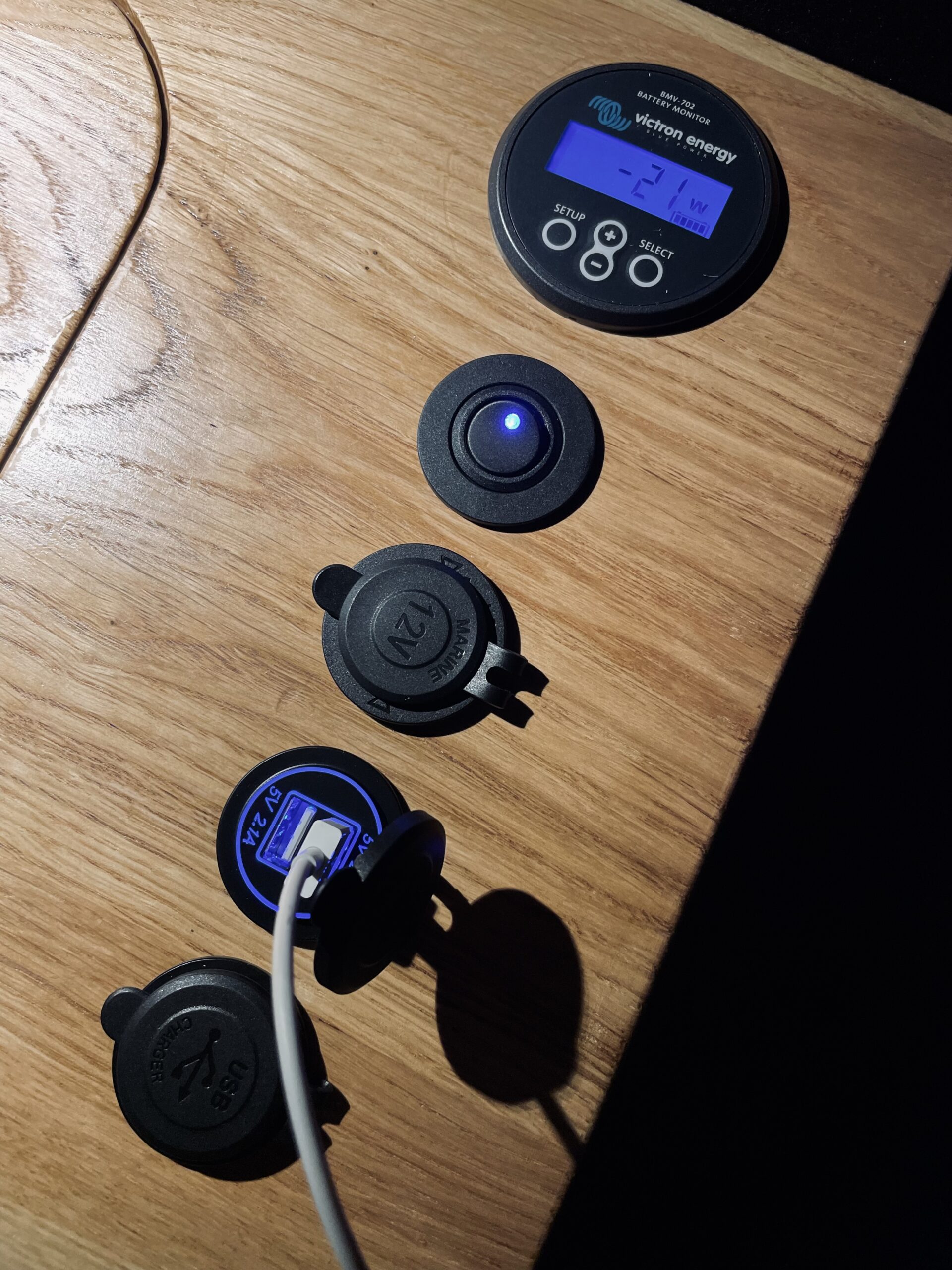
Once mounted, it all started to come together as planned. With the lights on, the oak brought warmth into the dark interior. The loading area now began to look like somewhere to spend an evening.
One important aspect of the build was that it needed to provide a bed for two people. After working through several options, the solution was relatively simple: a removable plywood element stored under the seating would bridge the gap to make a bed in about half a minute.
Throughout the build, the limited space shaped every decision. The compartments below the countertop and two soft-close drawers beneath the seating provided the main storage. I also managed to create some additional storage in the sidewall of the car.

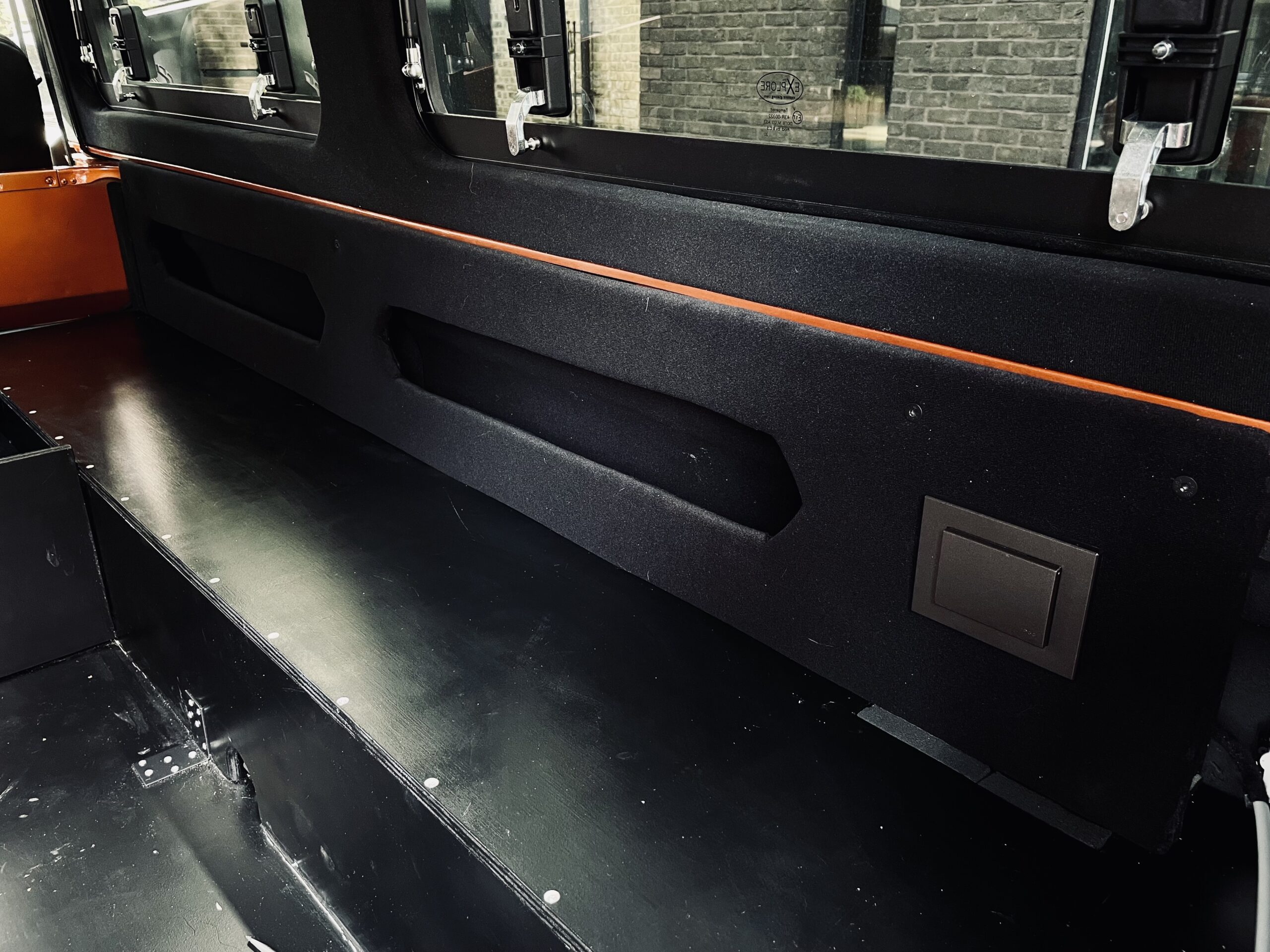

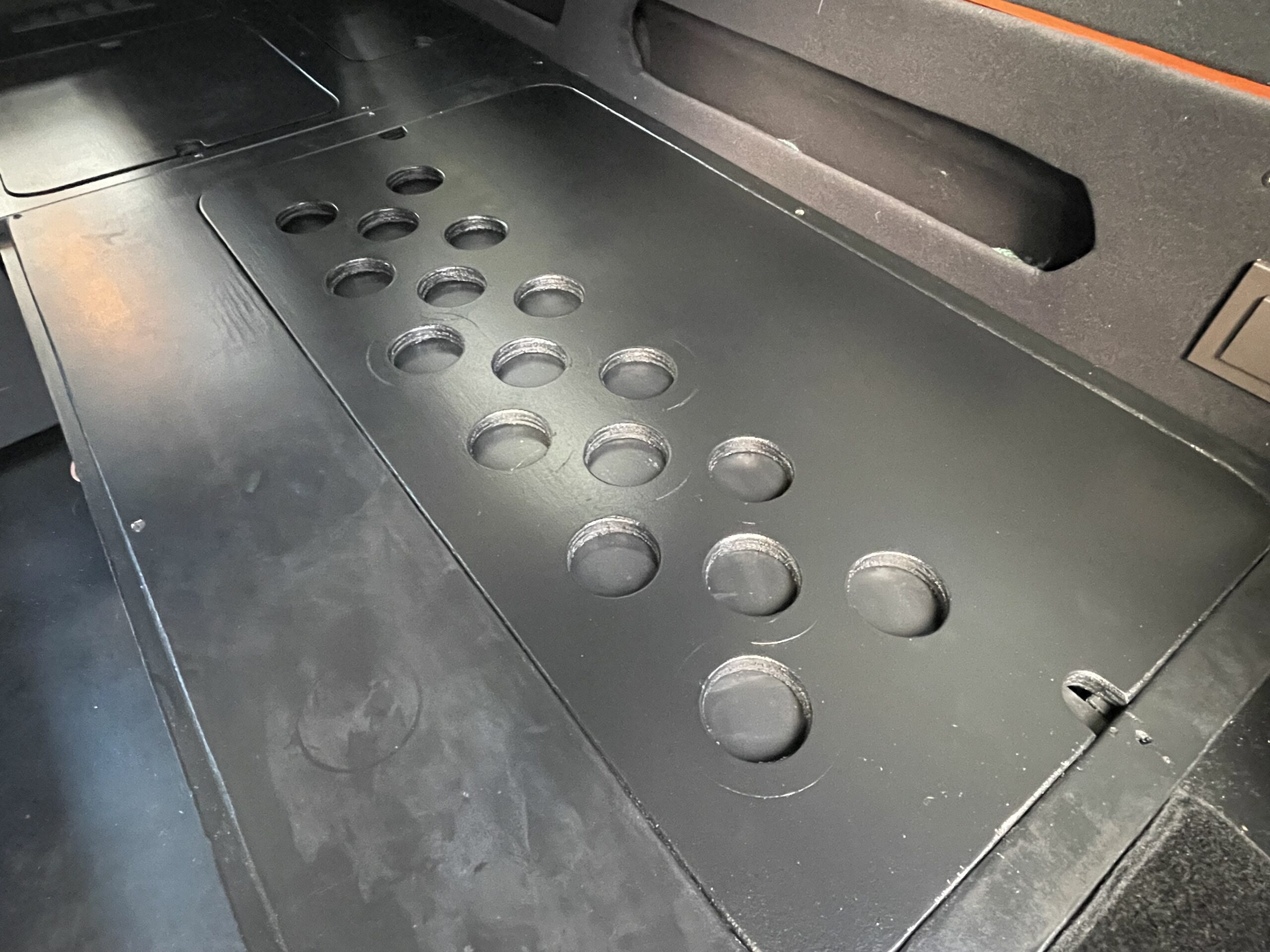

Weight mattered too, as I wanted to keep the weight of the entire conversion as low as possible. I therefore drilled holes and cut unnecessary wood from hidden and non-structural parts of the furniture. Most of that work vanished beneath the finished panels, but it allowed me to shave off a few tens of kilograms.
Lighting, USB and 12-volt outlets, a battery monitor and a shore-power connection covered all our needs. I considered solar panels for a while, but eventually left them out: we expected to travel mainly in the Nordic countries, use relatively little power and recharge sufficiently while driving. And, if needed, I could always add a panel later.
Finally, after working out the arrangement, we ordered custom-made cushions. They had to cover the L-shaped bench and form the entire bed when the backrest cushions were added. It was extremely satisfying to see this vision come to life the first time we installed the cushions in the back.


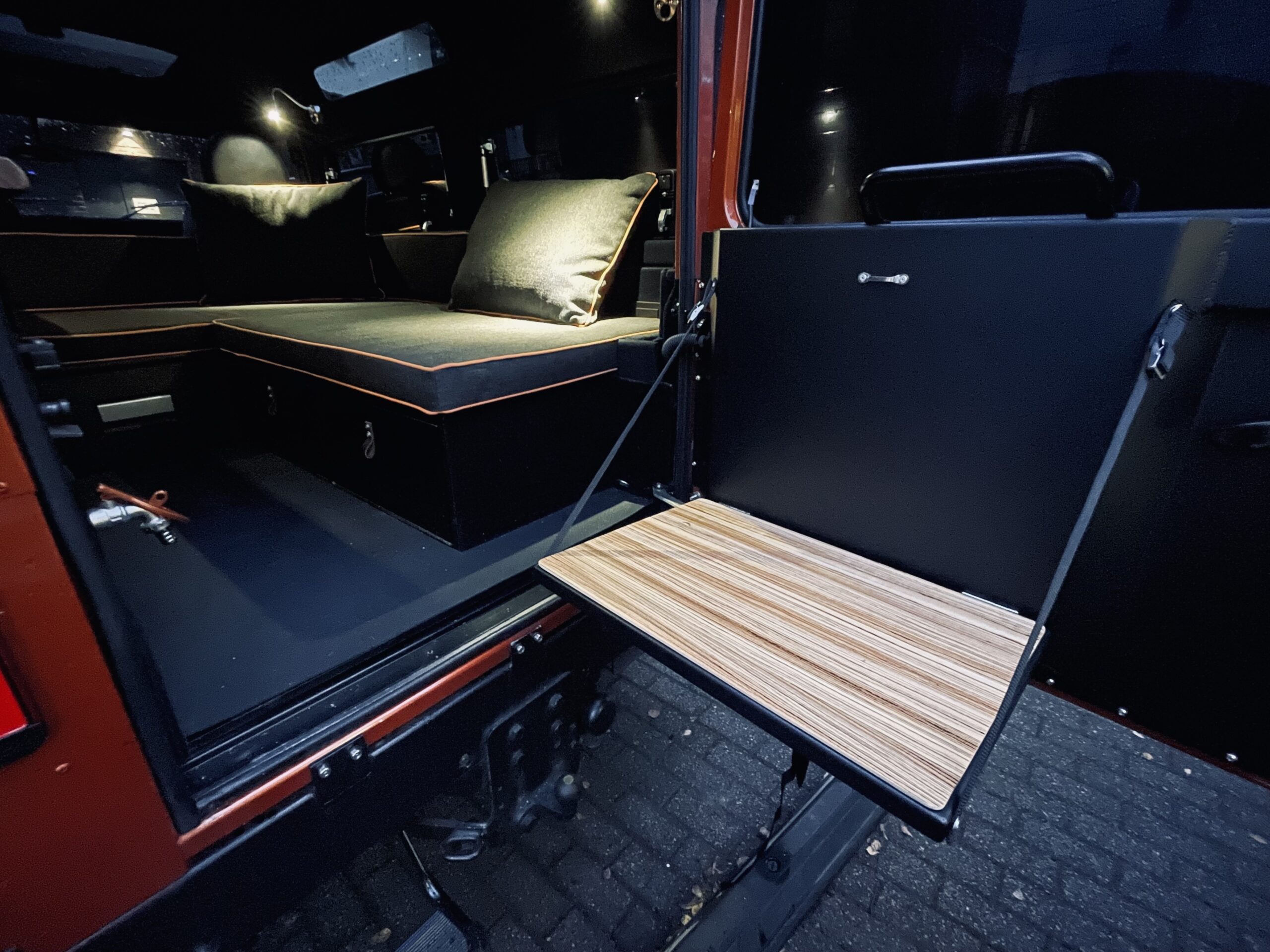
One of the last additions and an important element for outdoor cooking came in November: a fold-down wooden countertop mounted on the rear door. And then came that very last corner piece.


Becoming Firefox
With the off-road camper now finished, we only needed a name. Inspired by suggestions from friends, we found the perfect one: The Firefox. It combined the Land Rover Defender’s Fire Edition with a tale from Finnish folklore.
The Finnish word for the northern lights, revontulet, translates as “fox fires”. It comes from a Sámi myth stating that a mythical arctic fox ran across the fells, brushing its tail against the snow and spraying sparks up into the night sky, thus creating the northern lights.
We had a matching fox logo designed and placed it on the side of the car and on the steering wheel. The name and emblem linked our orange Land Rover Defender to the North we wanted to explore. Little did we know that a few years later we would call Finland our home.

A cold start
The Firefox’s maiden trip came in early December 2021. We headed into Gauja National Park during some of the season’s first proper winter days. At night, temperatures dropped to around minus fifteen or sixteen degrees Celsius and a fresh layer of snow added to the scenery.
The interior was insulated, but The Firefox was still a Defender with limited heating and plenty of holes for the cold to creep through. Naturally, it also became quite cold inside. Six months of building had given us a proper place to sleep, but it was certainly no warm winter cabin.
Still, it felt cozy, and the vehicle coped well with these conditions. Taking a newly finished camper straight into that cold was probably bordering on foolish. It was also a spectacular way to discover what traveling in it could be like.
The Firefox has seen ice and snow since, but never winter conditions as severe as on that first trip. Its toughest winter test came at the very beginning.

Dutch orange
The Firefox also had a place in our diplomatic life. During our diplomatic posting in Latvia, and later Helsinki, the car carried CD plates and was often parked in the city or used for diplomatic occasions. As a Dutch car, its bright orange bodywork suited those occasions particularly well.
It turned heads in Riga and continued to do so later in Helsinki. An orange Land Rover Defender with diplomatic plates was difficult to overlook. The vehicle fit into both our outdoor and diplomatic lives, although disappearing among the trees was considerably easier than on a city street.
A fox belongs in the woods
Latvia proved an ideal country for The Firefox. We could just leave Riga, head towards a large forest and follow a track deeper into the woods. And with everything we needed in the back, we could stay for a weekend, completely alone.
We did this quite a few times over the following years. It took surprisingly little distance to leave everyday life behind. A few turns along a forest track could be enough. We also did a bit of beach driving and followed permitted tracks through the coastal forests and national parks. Firefox reached places an ordinary car could not. A weekend away could become a small adventure almost as soon as we left the city.

Camping
We created a dedicated solution for Ala in the rear seating area. A short leash clipped to her collar and a dedicated attachment point kept her secured during the drive. She seemed happy there, watching the landscape pass through the windows.


At night, Ala curled up between us. The bed measured no more than 130 by 185 centimeters, which is already a small space for two adults, let alone with an Alaskan husky between them.
Staying in Firefox was much like camping in a small tent. There was room for what mattered, provided we accepted a little rearranging and some discomfort. Making the bed was quick; finding somewhere for everything that had been on the seats was part of the evening routine.
With some creativity and the right mindset, those small inconveniences became part of the enjoyment. We had somewhere to sleep, our dog between us and a forest outside. We had nothing to complain about, except for that one night we camped out in a rather violent thunderstorm…
Finding its limits
One trip went further than our usual forest escapades. I joined a Latvian 4×4 club outing with a large group of vehicles, ranging from basic Jeeps to Mercedes G-Class vehicles and everything in between.
It became quite an adventure, including river crossings, sand pits and some swampy terrain. The Firefox picked up some scratches and damage I had to repair afterwards. At some point, the snorkel was ripped from the car. Then, another muddy stretch hid a stone that damaged my steering rod to the extent that the drive home became rather dodgy. The deep river crossing went well, but later a swamp stopped the cars one by one. The winch came in handy, pulling my vehicle out of the mud and helping recover another one too.
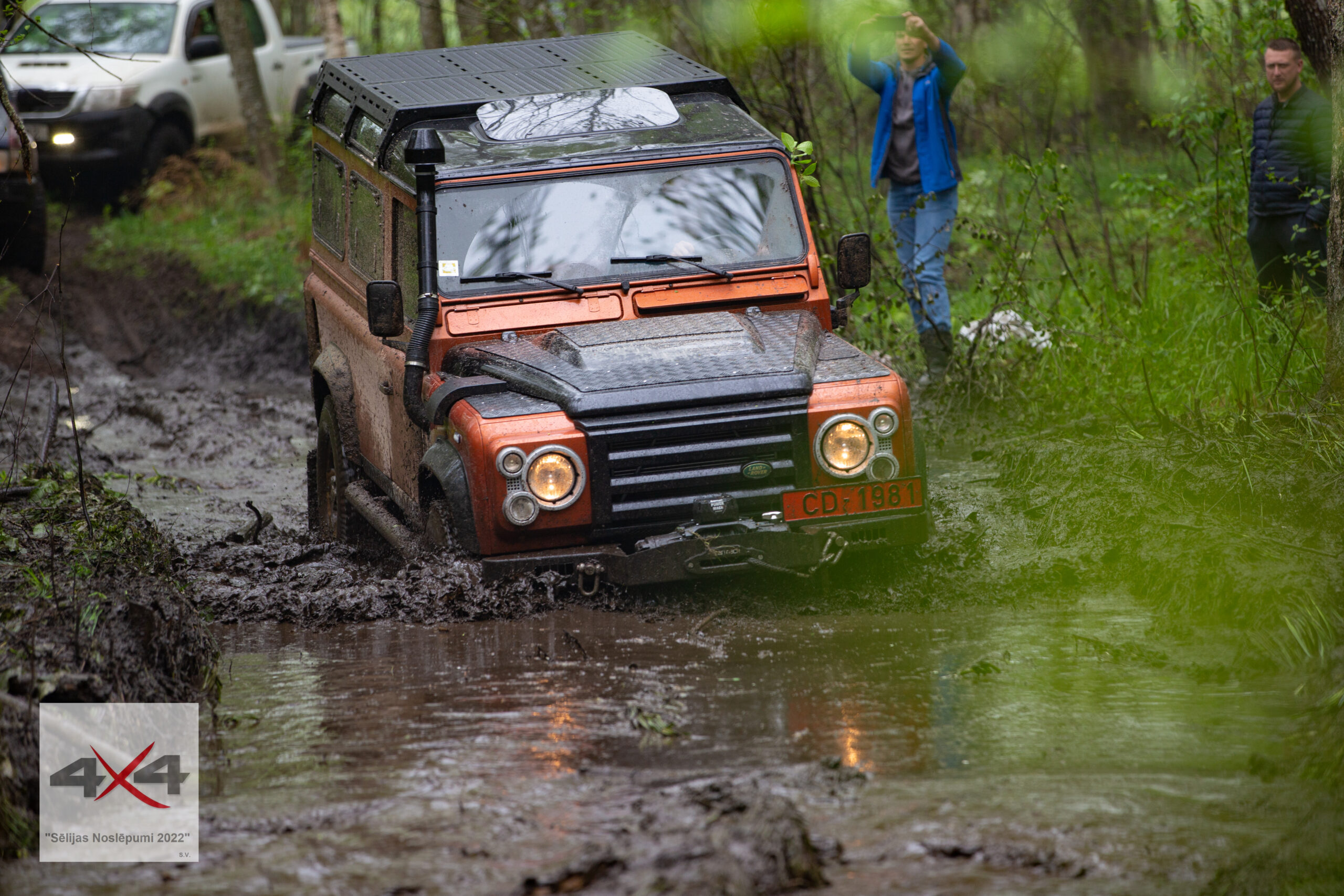


The winch proved valuable on another occasion as well. My best friend and I were camping out close to the Gauja National Park. Late in the evening, Ala suddenly growled at two young men approaching our car. We had seen them earlier that night and they now approached us asking for help. Their car was upside down in a ditch. It looked as though they had been joyriding, and we suspected they might have been under the influence of something. The car clearly would not be driving away again, but we got it back onto its wheels and had some fun in the process.
It was quite an unexpected endeavor in the middle of the night, and a memorable Latvian encounter.
The next chapter
A year or two after the conversion of The Firefox, I began a new project: turning a Mercedes Sprinter into Oscar, our current camper van. The knowledge and experience I had gained from converting the Defender made a big difference. I doubt that second conversion would have happened, or turned out as well, without the first. I will share Oscar’s story later, but its roots lie here, in this striking orange Land Rover Defender.
