

“I could hear them howling from afar.”
The opening line of Running to the Sea by Röyksopp and Susanne Sundfør. The song has nothing to do with dog sledding. It isn’t even about dogs. Yet over time, it became my personal anthem of the 25-day Barents Sea expedition with the Bardu Huskylodge in 2024.

It was part of a Nordic-themed playlist I listened to almost every night of the tour. I never skipped this track. At some point, I began visualizing my two powerhouses, Jotun and Kletten, running to the pace of the piano sequence. During the day, that same pattern kept looping in my head as I watched the team in front of me. Step by step, beat by beat, I slipped into the rhythmic trance of the dogs’ movement, the song quietly embedded in every step toward our destination, Vardø.
In many ways, this journey began months earlier. Long before the sleds were packed and the route north took shape, preparation had already become part of my daily life. The most important part of that preparation centered around Ala, our Alaskan husky from the Bardu Huskylodge, who would accompany me on this adventure. In the months leading up to the expedition, I prepared her for what lay ahead. Back home in Riga, Latvia, we put her through long balcony sessions to help her acclimate to the cold and grow her winter coat. We ran countless kilometers together as part of my preparation for my first marathon later that spring. For longer distances, she pulled the kickbike, up to a staggering 66 kilometers at a time. All in all, we spent 4,901 minutes training side by side in the months before departure.
A couple of weeks after the expedition, I ran the marathon I had been training for. As I approached the DJ booth around kilometer 38 in the center of Riga, I could already make out a familiar piano line. When I passed the speakers, the words “I remember running to the sea” cut through the noise of the crowd. It went straight in and broke me open in a way I hadn’t expected. In that moment, it became unmistakably clear how deep an impression this journey had left on me.
This is my story of our journey to the sea.

Day 0 — Everything has a place
Everything my sled would carry for the days ahead, laid out beside it.

A filled dog food container, two 18-kilogram blocks of frozen dog food, and 20 kilograms of dry food. The sweets box, a water container, dog vests, and the stakeout line.
For camp: a reindeer skin, outer sleeping bag, tent chair, shovel, and snowshoes. Gas canisters and benzine.
And then my own essentials: cabin shoes, a duffle bag, a daily dry bag, sleeping bag, mat and pillow, a photography backpack, tripod, thermos bottle, power station, and of course, whiskey.
But my sled was only one small part of a much larger system. Spread across all sleds was everything that would keep the expedition moving. Five pre-filled food containers, nine 18-kilogram packages of frozen dog food, and three 20-kilogram bags of dry food. Seven stakeout lines, seven pairs of snowshoes, seven reindeer skins, seven outer sleeping bags, and seven chairs. A total of nine shovels, including one dedicated to waste and one reserved exclusively for clean water.
There were two tents and two bivouacs, three water containers, spirit burners, a kitchen bag, a breakfast box, a tea box, a general tent box, bags of expedition food, and the medical kit. Dog jackets in reserve, spare harnesses, and replacement parts. An ice drill and a water puller completed the system.
Nothing here was excess. Every item had a purpose, a place, and a weight. Along the way, we would rely on four depots to restock food, clothing, and supplies, and to leave behind whatever we no longer needed.
With everything packed, there was no longer any room for doubt. This was it. Whatever we had forgotten, we would do without.


Day 1 — Out of the dog yard
Bardu Huskylodge to Vadvetjåkka National Park · 31.8 km

“Er vi klare? Oké!”
With that one short command we started our long journey to Vardø. Through the gates of the dog yard and into the valley. Along the river and up the mountain. Over the pass, into Sweden.
We left the Huskylodge without Tillerot. She turned out to be pregnant, most likely by Texas. We expect to see her again in Vardø, probably with puppies.
The route itself turned out to be surprisingly adventurous, with a lot of climbing and a few technical descents. On the long downhill after Stordalsstua, I tipped the sled. I managed to hold on, climbed back up, and then, with the help of a small bump in the trail, even managed to get the sled upright again. All of this happened under Jan’s watchful eye. A shame no one else witnessed it.
Overall, it felt like a relaxed first day. It always takes some time to settle back into the routines, but it was reassuring to notice how quickly they returned. We came up about eight kilometers short of today’s intended goal, but instead found a tranquil camp spot along the Čunuluoppal delta in Sweden’s Vadvetjåkka National Park. Just moments ago, we were treated to a subtle display of the northern lights.
Ala did well on this first day, although so far she only eats the frozen dog food. Pus has already destroyed two necklines and is now wearing a metal one. Étoile took out a pulling line. Ronny is just… Ronny. Letting Gipsy run alone seems to be working well; no ears have been bitten so far. Kletten clearly enjoys Jotun’s company, while Jotun, in turn, demands a lot of cuddles. Really. A lot.


Day 2 — A lot of Torneträsk
Vadvetjåkka National Park to Torneträsk · 55.7 km

Another joyful and adventurous day on the sled. So far, so good.
We had a calm first morning around camp, enjoying the scenery and the wolverine tracks along the river. In the end, we turned out to be a bit too slow, partly because we still had to make up for yesterday’s missed eight kilometers. The first stretch through the forest, heading toward Torneträsk, seemed to take forever. Jan got stuck twice along the route, and both times we had to find an alternative track through fairly technical terrain. The second time around, my team ended up leading the group for a few hundred meters. Ala and Pus listened surprisingly well, so that worked out nicely. Along the way, there were plenty of moments where we had to help one another just to keep moving.
Then we reached Torneträsk. Once out on the lake, we finally picked up speed and managed to cover the distance planned for today. Jan had warned us that Torneträsk could at some point become a challenge for both us and the dogs because of the long, monotonous driving. It turned out to be nothing of the sort. The dogs performed very well, and I found myself enjoying the easy driving and the slowly passing landscape beside us. Even with the higher pace on the lake, we are still about eight to ten kilometers short of the original destination though.
But that’s for tomorrow. For now, we need to focus on a game of 10,000.


Day 3 — A walk of shame
Torneträsk to Kiepanjaure · 47.5 km

We woke up at 06:30, a bit earlier than the day before. By 09:30 we were on our way, and around noon we had already ticked off 27 kilometers. Quite a difference compared to yesterday.
The first kilometers took us back onto Torneträsk, but before long we left the lake behind and headed back into the woods, gradually up into the hills. I felt a quiet sense of sadness leaving the lake so soon. For most of the day, we followed a snowmobile track, which helped keep the pace up. About halfway through, we stopped for lunch, and a bit later, somewhere above the treeline, we took another short break to give the dogs a snack.
And then, just after taking some photos, my sled hit a bump. I lost my balance, slipped off, and sank straight into deep snow. I came to an instant stop. My sled did not. Everything happened incredibly fast. Florian managed to alert Jan, who caught the sled, while I did the infamous and entirely pointless walk of shame, trying to catch up.
I can still hear Jan’s words, tinged with frustration: “Maybe it’s not always the best moment to take pictures.”
Along the way, we passed Per Nils’ cabin in Kamas. It was a small but meaningful reminder of our very first tour with the Bardu Huskylodge in 2020, and of the warm encounter we had with Per Nils after that journey.
We arrived early at the cabin near Kiepanjaure, which gave us plenty of time to get all the work done. It was the first night we put jackets on the dogs, and we dug snow holes to give them shelter from the wind.
The interaction and dynamics within the group still need some time to settle. The same goes for how we divide the work. Hopefully, we’ll find a more constructive rhythm in the days to come.


Day 4 — Back into Norway
Kiepanjaure to Rostojávri · 46.4 km

I spent most of the night at Kiepanjaure outside in a bivouac. Lying there in the pitch black, breathing the crisp air, it felt surprisingly cozy. Every now and then, the sounds of the dogs carried through the howling wind. The bivouac was a bit on the small side for me, though, and when it started snowing around 05:00, I moved back inside the cabin.
The morning was slow, and it took us some time to get back on the trail. Most of today’s route crossed a highland plateau under cold and windy conditions. Luckily, we were accompanied by sunshine for much of the day, which made the driving more comfortable than expected.
My team is doing great, and the same goes for Ala. She even started eating much better, which is a bit of a relief.
Via Rostojávri, we crossed back into Norway. When we arrived at the Stor-Rostahytta, one of Statskog’s cabins, it turned out to be empty. An unplanned but very welcome cabin night, offering extra shelter from the persistent wind outside. As always, the dogs got their jackets, and we built snow walls to protect them from the gusts and help them conserve energy.
The scenery around us was stunning. Whenever the wind eased, Buoššir mountain emerged as a dramatic backdrop. Later that evening, a display of northern lights added to the quiet magic of the place.



Day 5 — Highlands
Rostojávri to Vuolit Golddaluoppal · 40.2 km
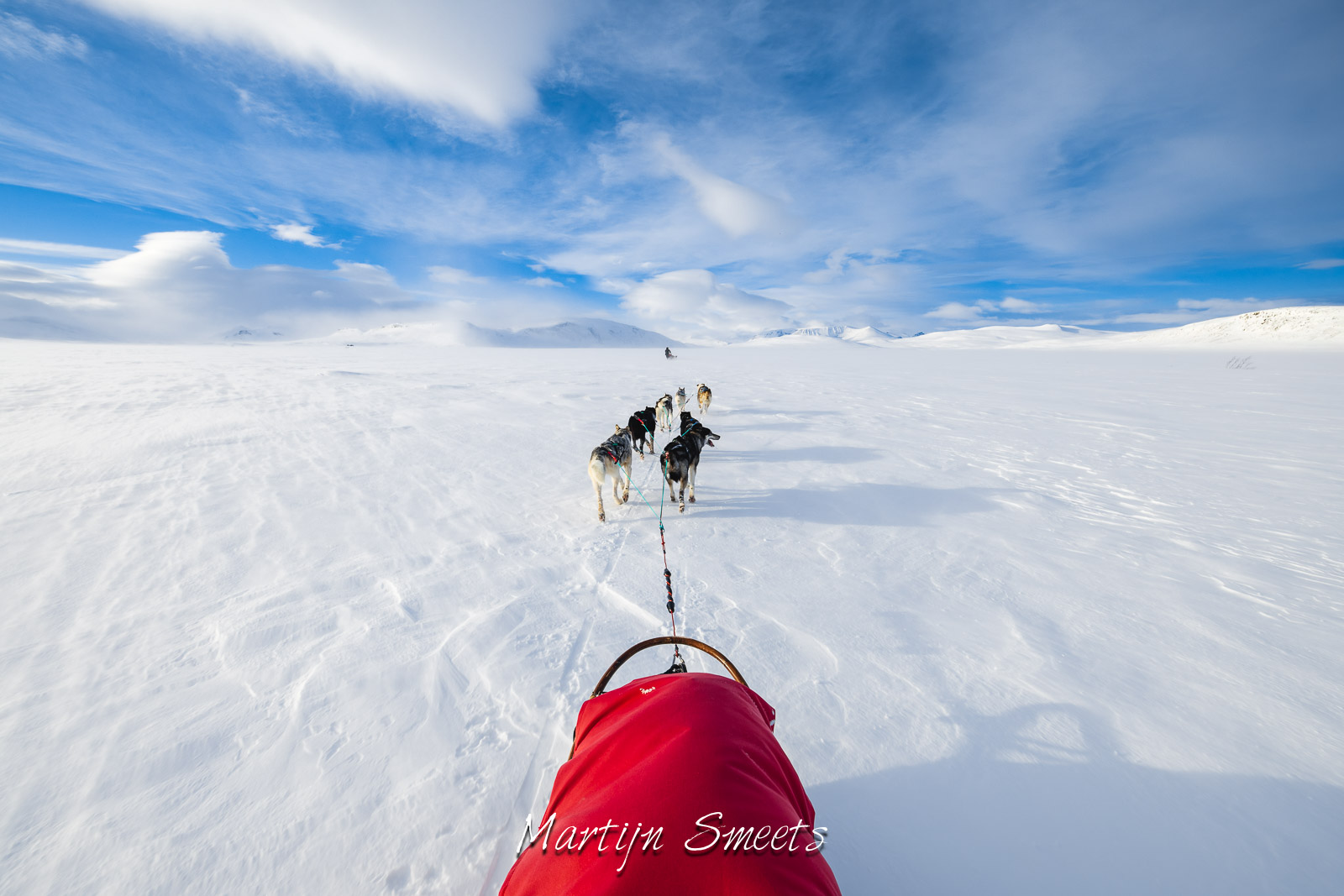
I enjoyed the morning routines at Stor-Rosta. The wind had settled, and there was some light snowfall. The dogs somehow looked more impressive than usual, with the stark contrast between their jackets and the bluish winter tones around us. Working with the dogs, preparing food and snacks, felt calm and focused in these winter conditions.


Today we headed back into Sweden, crossing the highlands toward Pältsa. We were hoping for wide views along the way, but for the first part of the route, low-hanging clouds kept the peaks hidden from sight. The light was soft and diffuse, giving the landscape a muted, almost monochrome feel. Near the foot of Pältsa, close to the mountain cabin, we stopped for a long and relaxed lunch break. During that pause, the clouds lifted and the surrounding mountains gradually came into view.


Back in Norway, at the Vuolit Golddaluoppal pond, we had to maneuver a bit to find a suitable place to set camp. It is a quiet, sheltered spot, tucked into what feels like a small valley.
We’re now getting ready for bed. Not counting my night in the bivouac, this will be our third night in the tent on tour.


Day 6 — The Helligskogen pass
Vuolit Golddaluoppal to Helligskogen · 22.1 km
Depot day! A first real milestone on the journey.
The day started in very windy conditions, with tough snowdrifts across the trail. Crossing the Helligskogen pass was on the plan. When traveling with dog teams, there is no alternative route here if you want to avoid traveling through Finland, which made this a crucial point in the overall planning. There was some doubt about whether we would be able to cross the pass and manage the long, demanding descent on the other side in these conditions. Still, we decided to give it a try, knowing it would be a challenging day despite the relatively short distance.
The weather turned in our favor. As soon as we started climbing Helligskogen, the wind eased and the sky nearly cleared. We found ourselves in a perfect window of opportunity, and the climb turned into a genuinely enjoyable ride. Apart from one unplanned overtake, the descent went smoothly and without incident.

Not long after, we reached the first depot location. Because of reindeer herding activity nearby, we tied the teams together to make sure none of the dogs would attempt to head toward the reindeer. Around the same time, the weather shifted again. Strong gusts and drifting snow added to the chaos.
When we were ready to leave, a miscommunication between Florian and me led to a mistake. Pippi was still tied to my sled, and we had connected her collar instead of the pulling line. In the confusion, I had already started moving when Florian shouted for me to stop. We managed to cut the line quickly. Poor Pippi. Thankfully, she was unharmed, but I felt guilty for quite some time afterward. I made sure she received some extra cuddles once we arrived at our camp spot on the shore of lake Gálggojávri.


Day 7 — The hardest climb
Helligskogen to Guolasjávri · 34.6 km
A full week on the trail.
Today had the toughest climb of the expedition in store for us. Even though the forecast predicted windy conditions, we were lucky to have a full day of sunshine and relatively little wind, at least until we reached our camp near the border of Reisa National Park.


The first stretch uphill was extremely tough and slow, with an average speed of no more than six kilometers per hour. We had to push the heavily loaded sleds frequently just to keep moving. Within my team, Pus was too distracted, so we moved him one row back. Varanger took his place next to Ala, and Étoile moved into Jan’s team. The change made an immediate difference.
Not much later, Ina’s team stopped working altogether and stopped responding to commands. The only option was to reshuffle some dogs between her team and Florian’s. Frustration was clearly in the air, and the dogs seemed to pick up on it. Shortly after, Bolle attacked Nero within Florian’s team. Florian and I rushed in, and it took several kicks to Bolle’s head to get him to release. It could have ended badly, but fortunately Nero was not injured. Still, the surge of adrenaline left both of us completely drained.
From there on, the climb became a bit more manageable. During the lunch break, there was time to calm down and let the tension fade.
After about six hours on the trail, we arrived in an almost otherworldly landscape of snow and ice formations. We placed the teams in a circle around the planned tent site. Once the tent was up, we were grateful for the shelter from the strengthening wind. And, as always, Ala is in the tent with us, curled up beside me. A cozy end to a demanding day.


Day 8 — Three countries
Guolasjávri to Reisa National Park · 54.7 km
On my very first dog sledding expedition, this would have been the last day on the trail. It’s a strange realization that we’re not even a third of the way through this expedition yet.
It was another joyful day for me. We started at the edge of Reisa National Park and soon entered the barren landscapes of Reisa itself. It was windy, with plenty of snowdrift, but that only added to the character of the scenery.
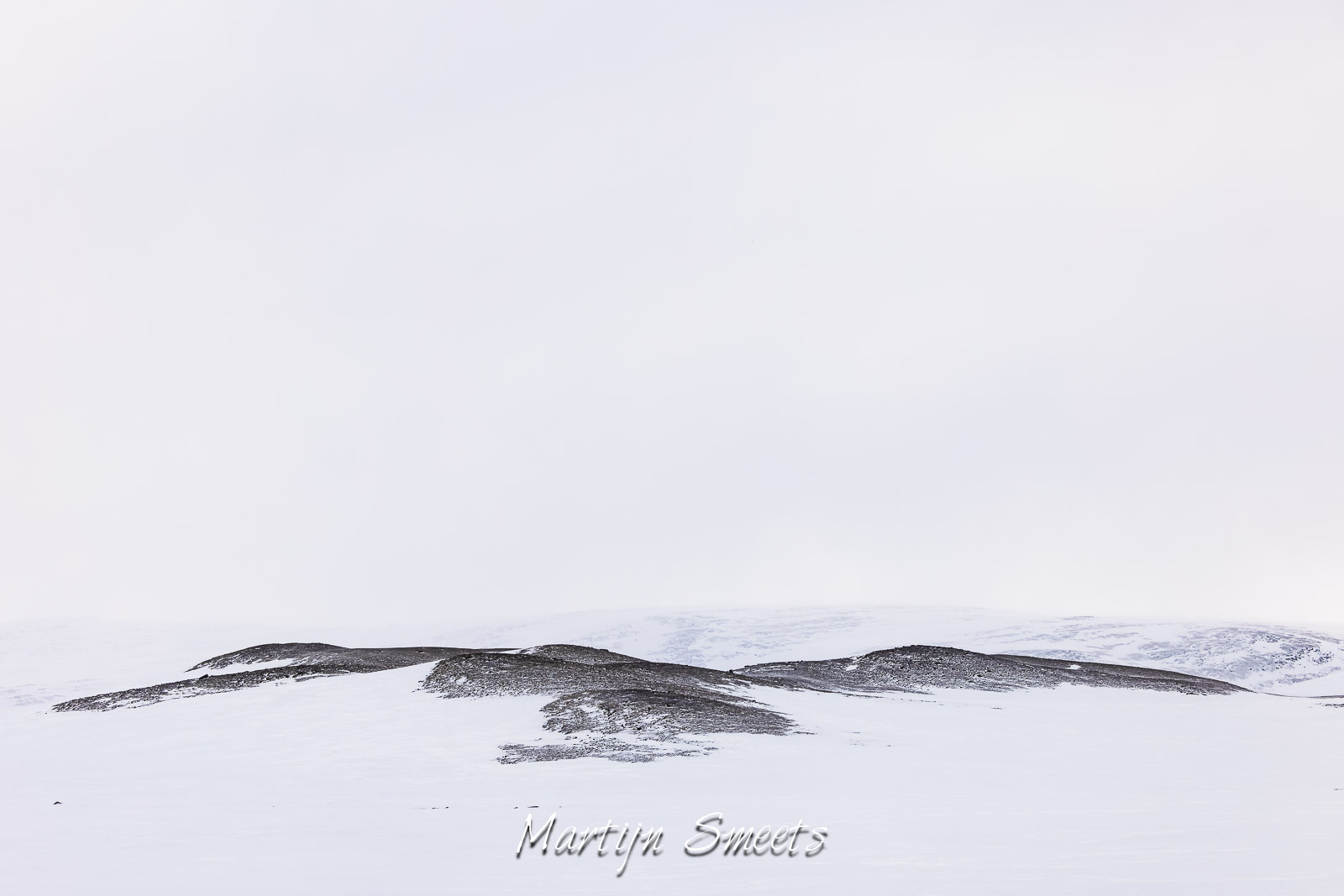
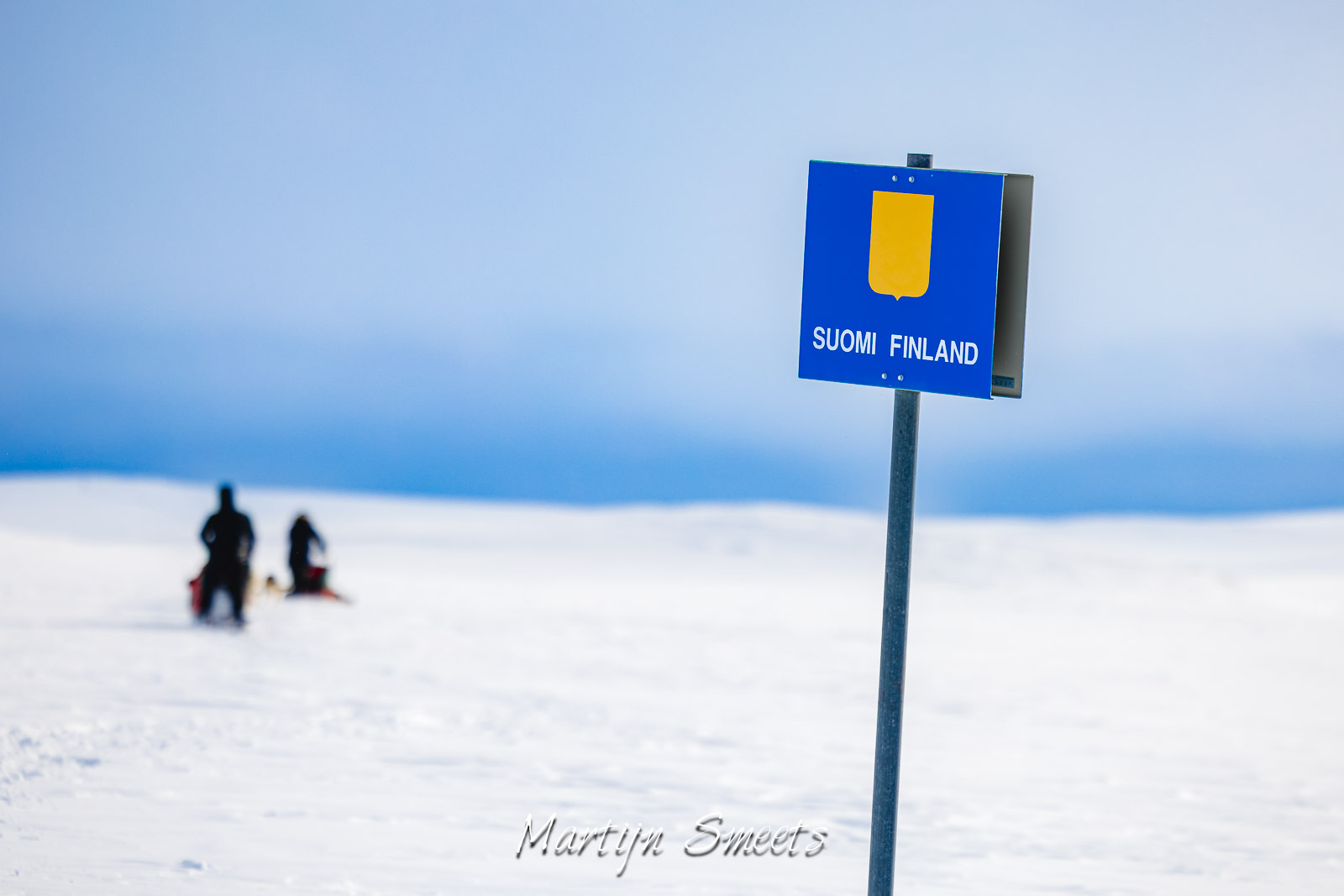
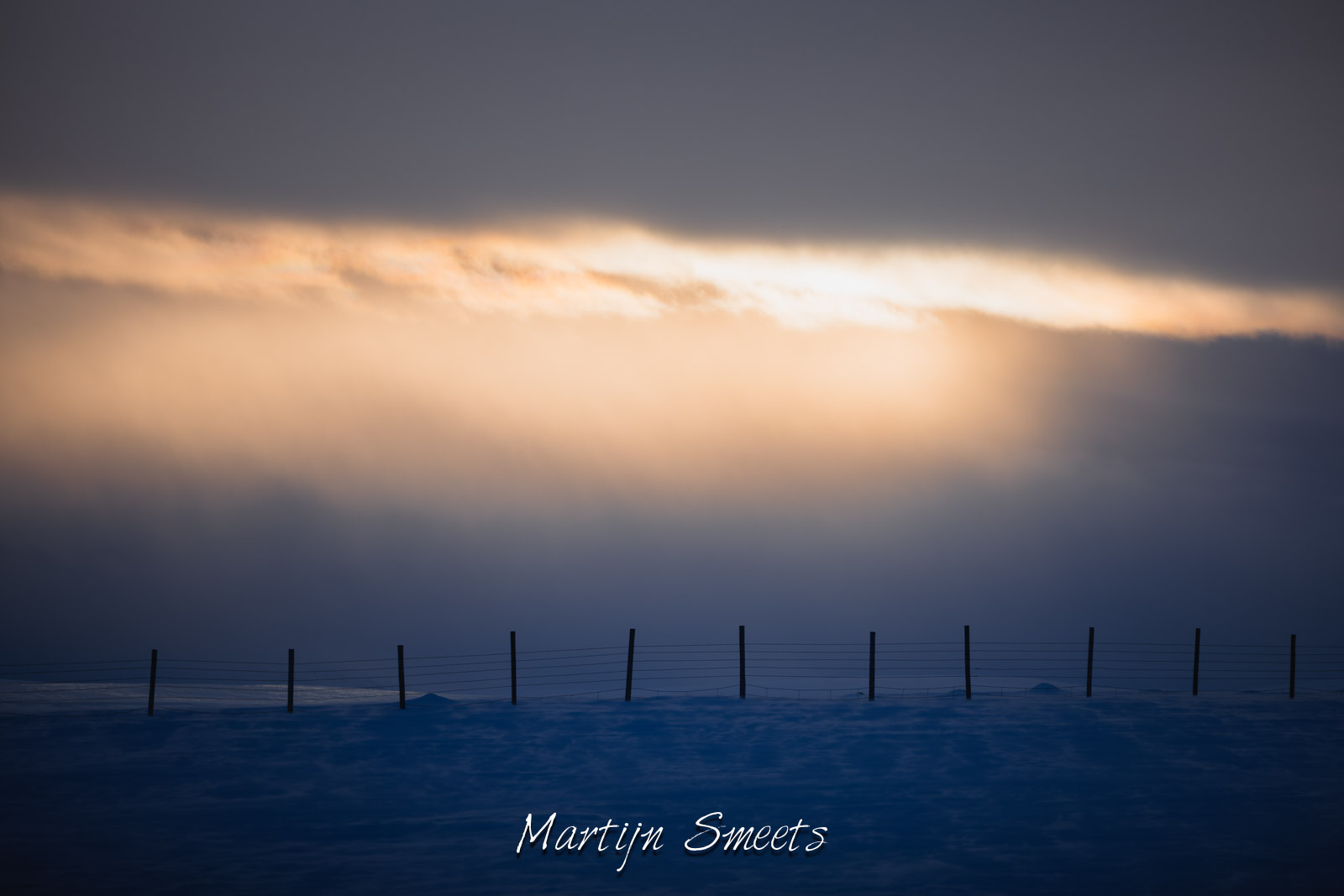
We traveled around the base of the Halti mountain massif and cut through several kilometers of Finland’s Käsivarsi Wilderness Area. We have now traveled through three countries! For much of that stretch, we followed the reindeer fence that separates the herds on either side of the border, a clear line running through an otherwise open landscape.
Originally, we had planned to stop halfway at Somashytta. Instead, we doubled the distance and continued all the way to Deatnomuotkihytta, at the southern end of Reisa National Park. Tomorrow will be a rest day. For part of the group, it will be a much-needed opportunity to recover and to work through some of the issues around group dynamics.
The cabin itself is very basic and has only four beds, which, unsurprisingly, led to some discussion. Ah yes. Group dynamics.

Day 9 — Rest day
Rest day in Reisa National Park
A rest day on the trail. It feels strange to suddenly have a full day without moving. Some time was spent talking through group dynamics and expectations for the days ahead.
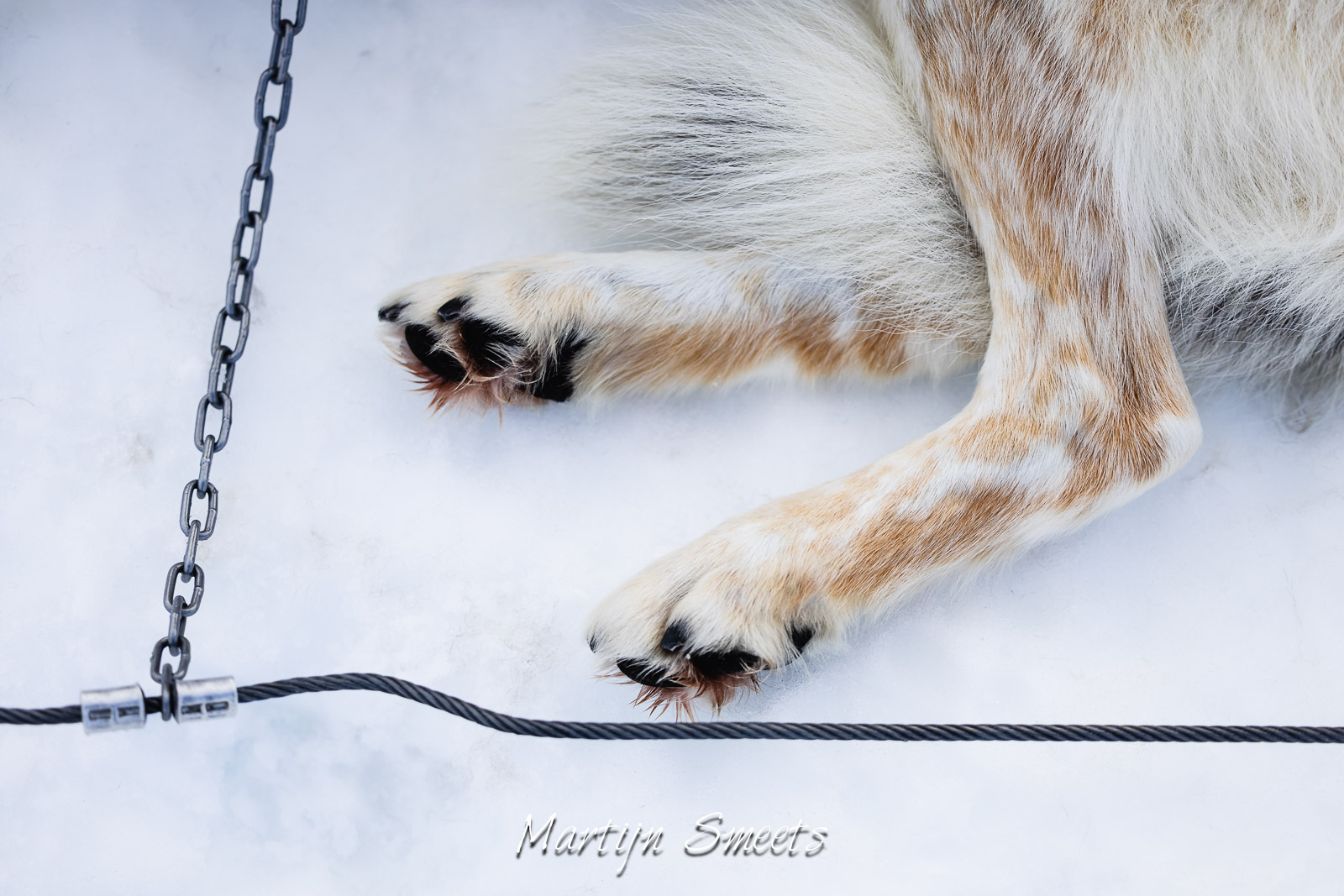
Even so, there was plenty to do. The dogs needed the same care as always, and they received some extra attention to make the day pleasant for them as well. Most of them used the opportunity to rest and sleep. So did we. The weather was mild and sunny, inviting a bit of sunbathing and, in my case, an actual bath in a dug-out pool in the lake. Later, Florian and I set out on a short snowshoe hike through the valley, which quickly turned out to be far more challenging than we had anticipated.


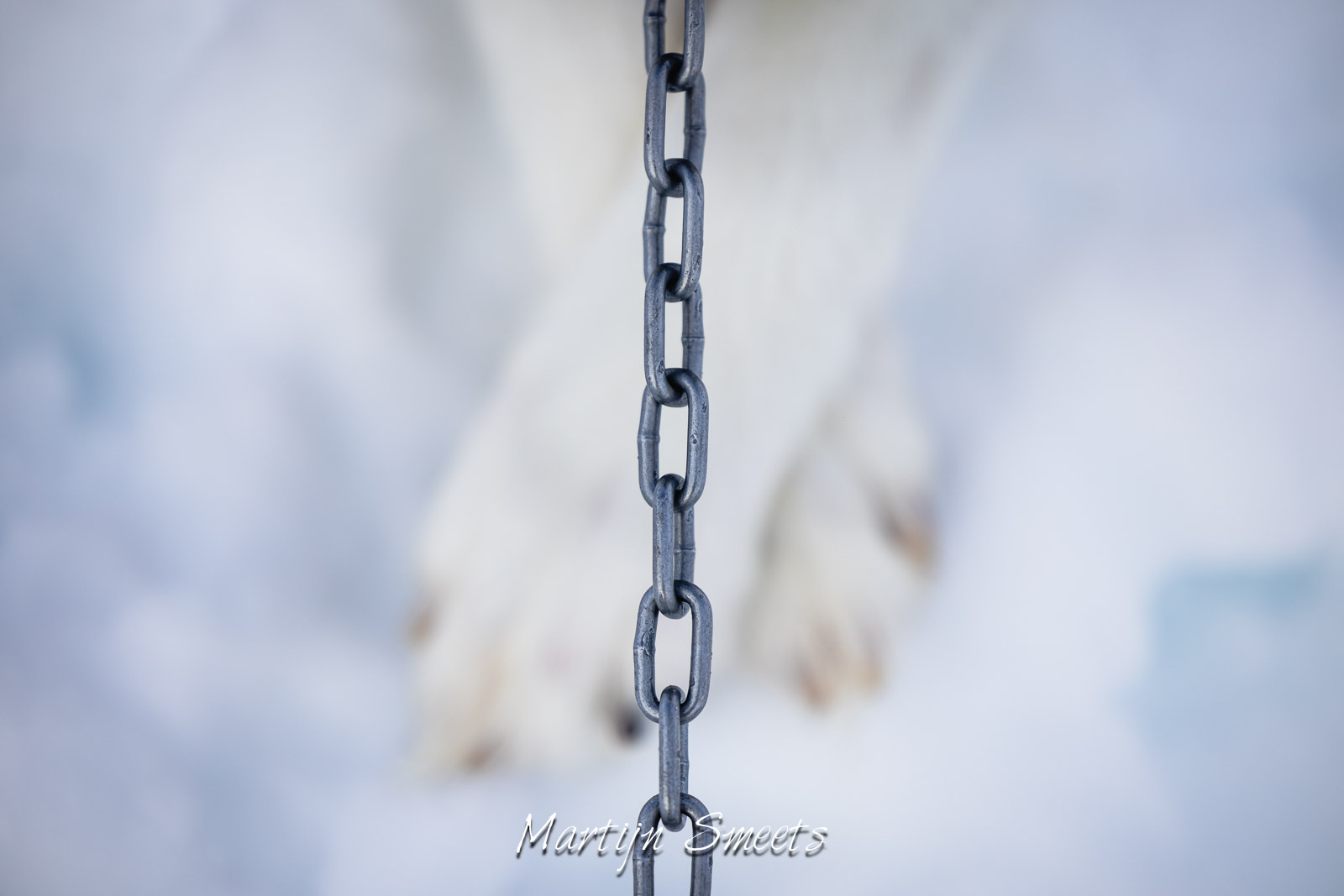
This pause offers a good moment to reflect on my dog team. Starting at the back:
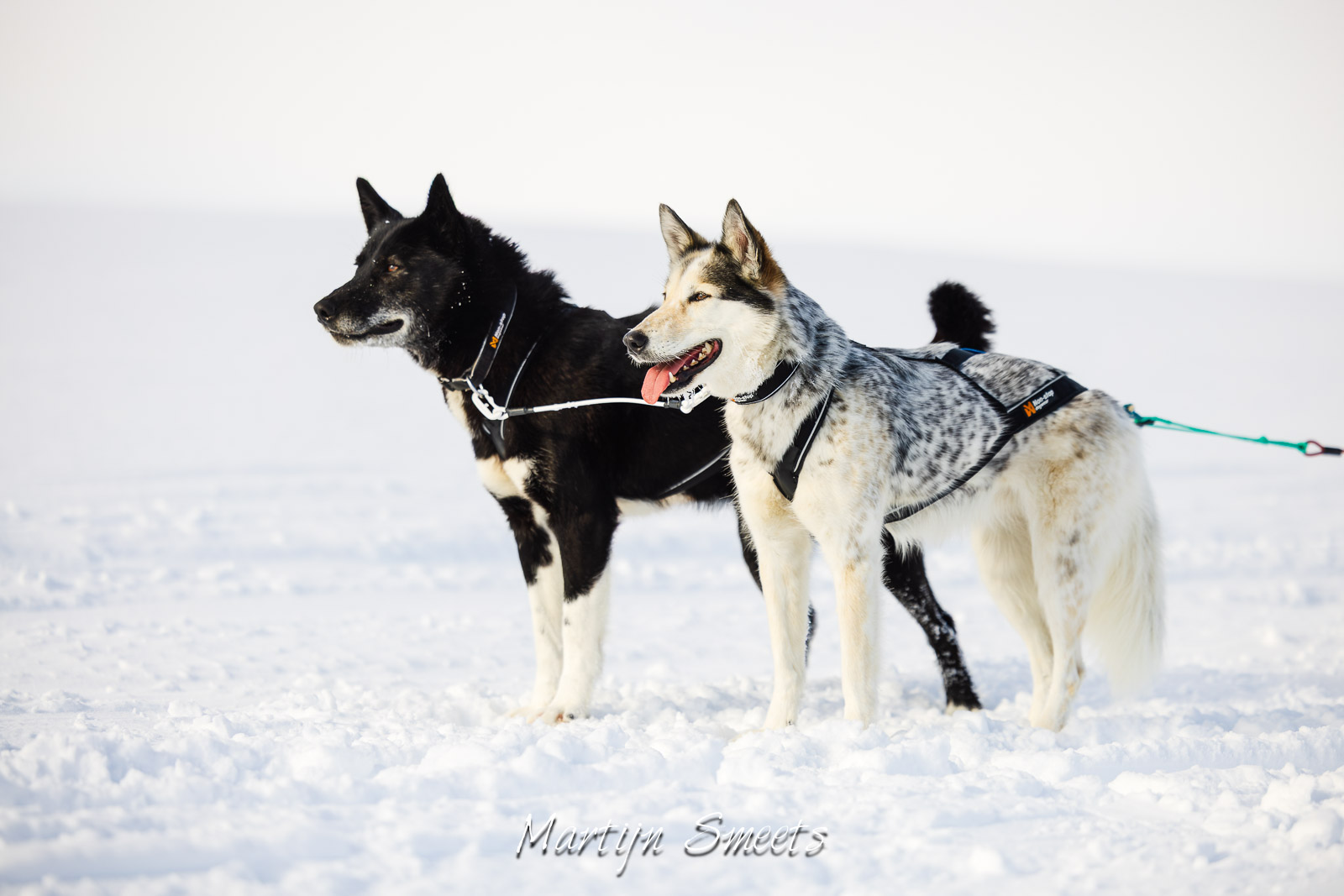
- Kletten is, in many ways, a larger version of his sister Ala: shy, careful, but hard-working, and with a characteristically large tail. He prefers to run on the left side and gently nudges Jotun back whenever he drifts too close.
- Jotun is a steady worker with an endless appetite for cuddles, a true park ranger who seems to constantly take in the landscape as he runs.
- Ronny is sweet and affectionate, but feisty and vocal toward any dog beside him.
- Gipsy shares that restlessness. Whenever we stop, she just want to move, and once she starts pulling, her power is unmistakable. Sadly, she got replaced by Voss.
- Voss came in from Ina’s team and might be the easiest to handle. A very steady dog.
- Étoile, sweet Étoile. She is also no longer in my team, but she deserves a mention: small, focused, and hard-working.
- Pus is a brilliant lead dog, but one with a very clear will of his own.
- Varanger is the jukebox, always making sure she is heard and not forgotten. In the mornings, getting her properly harnessed can take a bit of extra effort.
- Ala now seems fully settled into the rhythm of the tour and works remarkably well. There hasn’t been a single sign of her losing focus or energy.

Day 10 — Runaway sled
Reisa National Park to Kautokeino · 60.3 km
Today the landscape shifted from steep, demanding hills to more rolling and open terrain. We also had to cross several roads today, which is always a slightly nervous moment. The crossings themselves went well, but a few sleds were lost along the way. Both Jörn and I ended up catching a runaway sled at some point during the day.
The most nerve-wracking moment came right at the end, on the final descent toward our depot and campsite along the Kautokeinoelva River. Just before the descent, we had to cross yet another road, with bumps on both sides. About fifty meters later, I heard a distant scream. When I looked back, I saw a dog team coming down the track without a driver.
The bobsleigh-like trail kept the sled perfectly on course, its speed steadily increasing, much to the dogs’ obvious delight. They were flying. The problem was that there was absolutely no room to overtake, and a collision here would almost certainly end badly. I shouted “Go! Go!” to Florian, who was driving ahead of me, urging him to accelerate. While balancing my own speeding sled, I grabbed the neckline of the lead dogs behind me and pulled them slightly to one side to avoid contact. Near the bottom of the slope, I could no longer hold them, but Florian arrived just in time to catch the runaway sled, reducing its speed before the team ran into me.
After that rush of adrenaline, there was still work to be done. Bjørn Klauer was waiting for us at the road with Depot 2. Once the dogs were taken care of, we had to haul the depot supplies down the same descent we had just come down.
While we worked, the dogs curiously watched a group of reindeer being herded on the opposite shore of the frozen river. We were now in Sámi territory.


Day 11 — Onto Finnmarksvidda
Kautokeino toward Vuolit Nieidajávri · 62.9 km
Today was marked by a lot of snowmobile tracks. For the first part of the day, we followed the Kautokeinoelva as it led us through Kautokeino toward Ávži. From there, we climbed back up onto the Finnmarksvidda plateau.

The original plan was to cover 68 kilometers, pushing all the way to Vuolit Nieidajávri. Along the way, a Sámi informed us about ongoing reindeer herding activities in the area, which forced us to adjust our plans slightly. Instead of pressing on, we set up camp a bit earlier at the shore of an unnamed lake somewhere in the open highlands.
The day wasn’t without its challenges. During the long climb out of the river valley, one of the teams lost momentum. The dogs became demotivated and simply stopped working, leaving us no choice but to reshuffle teams once again. It was another reminder of how easily human frustration can transfer to the dogs, especially during sustained climbs after many days on the trail.
Later on, a moment of miscommunication at the back of the group led to Ane losing connection to the group just before a crossroads. Nothing dramatic, but enough to underline how quickly things can become complicated when focus slips, even for a moment.
All in all, it was a day that demanded both patience and strength.
Day 12 — The snackcident
Across Finnmarksvidda · 52.3 km
Today was a challenging day in several ways. It started with some frustration in the morning due to a delay in one of the teams at the back. Later on, we had what can only be described as a snack accident. Or perhaps a snackcident.
During the first of the two planned snack breaks, Nanook managed to pull Jan’s entire team backward, far enough to reach a second bag of snacks tucked away at the back of the sled. By the time Florian and I noticed and ran over, he already had a firm grip on the prize. Even after a few kicks and blows to the head, Nanook refused to let go. It took Jan charging in and landing elbow-first, full force, for Nanook to finally release the snacks.
The sledding itself wasn’t easy either. Snow conditions have been remarkably consistent throughout the expedition, which also means hard work whenever there’s no existing track to follow. That was very much the case today. We had to break a lot of trail, and even running in second position it was slow, heavy work.

Ala performed incredibly well today. Watching her push through the deep snow was impressive, especially given her size. It can’t have been easy, yet she kept going without hesitation. I think this may have been her strongest day on this tour so far. The snack incident did leave an impression on her, though. With front-row seats to the scene, she was visibly shaken afterward, tucking herself in as small as possible and softly whining. Back in the tent, she has been in a deep sleep for quite some time now.
Because of the lack of tracks, we weren’t able to reach the Sámi wilderness church and had to adjust our route. We set up camp near a small stream close to the Šuorpmogorži waterfall along the Báišjohka River. Collecting water there turned out to be risky, with collapsing snow walls adding another layer of caution to an already long day.
Tomorrow will be shorter than planned. And if all goes well, there should be a sauna waiting for us.
Day 13 — A well-timed sauna
Finnmarksvidda to Šuoššjávri · 27.1 km
Today was such a short day on the sled that it almost felt like a rest day. Arriving early at our destination, which also marked our third depot, gave us plenty of time to sort through our gear and, most importantly, enjoy the sauna. That sauna couldn’t have come at a better moment for me, as I started to feel a bit under the weather. A virus has been making its way through the group over the course of the tour, seemingly hitting each new person a little harder than the last.
On tonight’s menu: authentic bidos, a traditional Sámi reindeer stew.


Day 14 — No pancakes, but something with reindeer
Šuoššjávri to Ravnastua · 48.4 km
The day started with a very welcome and hearty breakfast. We initially went north, mostly following the Iešjohka river. Halfway through the day, at Mollisjok Fjellstue, we turned east. We probably could have had pancakes for lunch there, but instead we ate our bread a few kilometers further down the route. A small minus on the day’s program.

On our way toward Statskog’s Ravnastua Fjellstue, we followed a popular ski route and encountered several groups of skiers, some of them with dogs. This required careful steering on our part to keep the sleds well clear of their tracks. Fortunately, everything went smoothly.
I felt increasingly unwell throughout the day, dealing with a rough cold and a rising fever. It made what would otherwise have been an easy stretch feel unexpectedly heavy. Once we arrived at Ravnastua, I took the time to rest a bit. The sauna later that afternoon seemed to do its work, helping to clear my system and take the edge off.
On tonight’s menu: “Something with reindeer.”

Day 15 — The longest distance
Ravnastua to the Tana River · 66.5 km
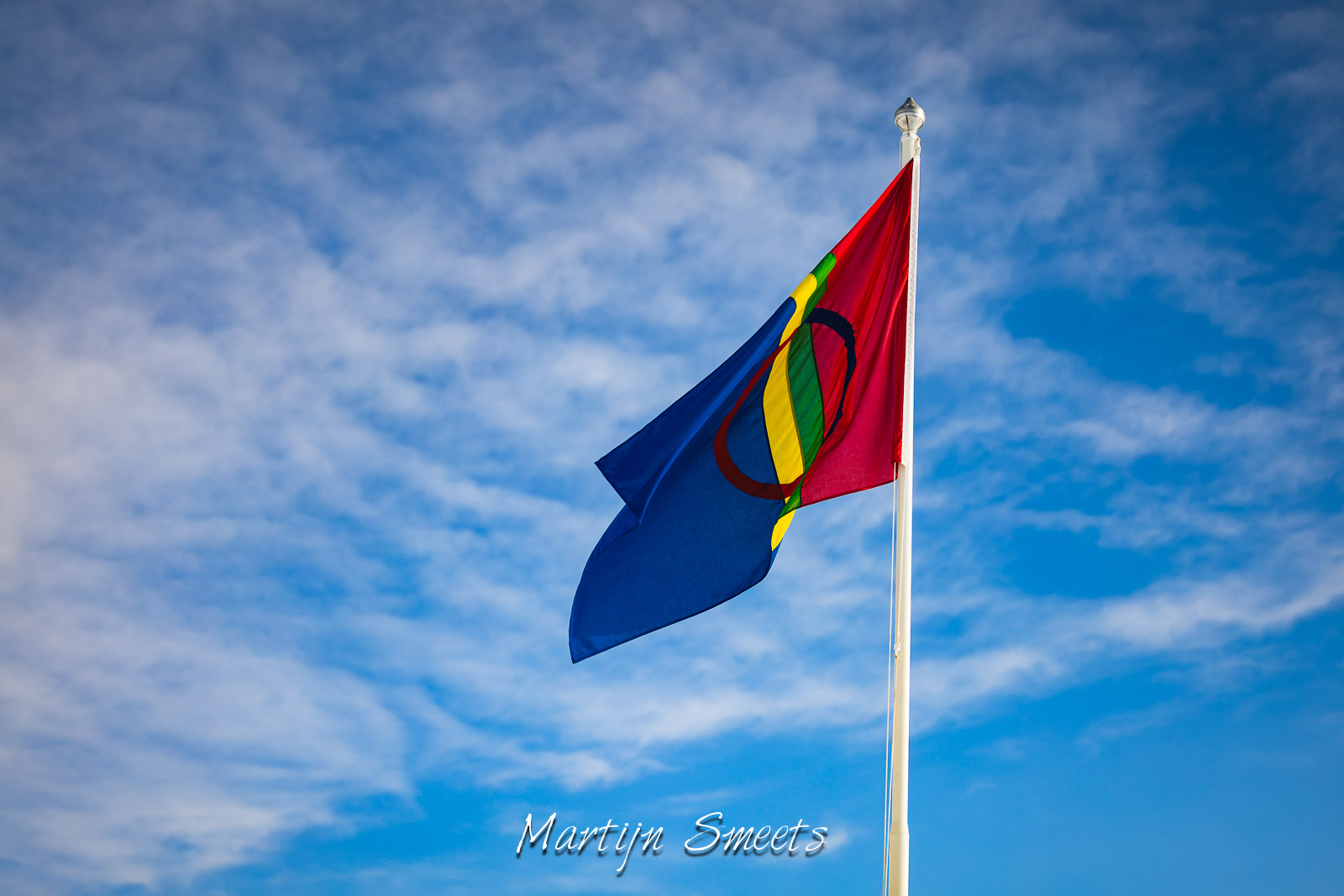
We woke to a beautiful sight: trees lined with white ptarmigans, suddenly very visible due to the lack of snow in the branches. There were so many of them. Unfortunately, a fogged-up lens made it impossible to photograph the scene. The memory will have to do. After another well-catered and varied breakfast, we took part in the Sámi flag-hoisting ritual.

The route began with a thrilling downhill through the forest toward the Tana River. For the rest of the day, we followed the river downstream. Along the way, we passed through Karasjok, where Jan enjoyed a stretch of snowmobile driving. Ane took over Jan’s sled for a while, and Ane’s sled was driven by the snowmobile’s owner, with his young niece riding along. Undoubtedly a memorable experience for both of them.
Much to my surprise, the stretch along the Tana River was genuinely beautiful. At one point along the way, Ane and I quietly exchanged a few small “goods” to enjoy while driving, a small indulgence on a long day. And long it was. By the end, this had become Ala’s longest distance so far, surpassing even our longest training runs from a few weeks earlier, if only by a few hundred meters. She is still going strong!
At our campsite on the riverbank, Florian and I attempted to drill for water, only to destroy a set of ice-drill blades on hidden sandbanks below the ice. Later, Ane and I tried to reach a spot where we could hear running water, but the ice proved too unstable to risk going any further. So, ice melting it is.
It’s a bitterly cold evening. The thermometer now reads −30°C.
Day 16 — Racing on Tana
Tana River to Sáttojávri · 63.9 km
A cold night led into an equally cold day, with temperatures regularly dropping to −20°C while on the sled. We followed the Tana River for roughly fifty kilometers before turning back into the hills, picking up this year’s Finnmarksløpet route. Just before leaving the river, we encountered a dangerous stretch where the ice had broken open. A high-speed turn was needed to avoid sliding toward the water. It was tense, but everything went well.
Out on the river, Ane and I couldn’t resist a small race, driving our teams side by side. My dogs won. We hit an impressive 27 kilometers per hour on the flats.

At camp on the open plain, we once again placed the teams in a circle around the tent site. It continues to make a huge difference for camp logistics and flow.
I need to finish my whiskey now and head outside, because the lights are showing.


Day 17 — Making the distance
Sáttojávri to Gárcojávri · 57.8 km
This felt like the coldest day of the expedition so far, mostly because of the wind. The track rose and fell continuously, leading us through rocky terrain and wide, empty white plains.
We took two long breaks in sheltered spots, where we could briefly enjoy the bright sunshine. Apart from that, not much happened today. It was one of those days where you simply go with the flow. And that, more than anything, is what sets this expedition apart. More than on previous tours, the dogs have become our mode of transport, carrying us steadily toward Vardø. Today was mostly about making the distance.


Day 18 — A home in Bonakas
Gárcojávri to Bonakas · 54.1 km
We woke to fresh snowfall and noticeably milder temperatures. A welcome change.
Along the way, we crossed paths with two solitary mushers and a few small reindeer herds. We took a calm break in the sun, enjoying the stillness. Now that the dogs are clearly tired, these pauses come more naturally, with less impatience and more acceptance.

We ended the day at Bjørn Tore’s place, a youth friend of Ane, where we will stay for the night. Here, the final depot of the tour was waiting for us, which meant there was still work to be done rearranging the cargo.

The original plan had been to arrive on a weekday, with the hope of keeping things relatively restrained. With tomorrow being Good Friday, that plan quickly fell apart. Bjørn and his neighbors were clearly on a mission. His garage turned into a small-town gathering spot, the kind that seems to assemble itself without any coordination. A small table stood at the center, gradually disappearing under bottles of spirits, beer cans, and an ever-growing collection of schnapps glasses. The conversations grew louder, the pours more generous. As the evening went on, a quiet divide emerged between the drinking and the sober.
In the evening, we enjoyed another homemade bidos and a lively discussion about meat, and more specifically, the ethics of hunting. It involved a clear clash of cultures.
Day 19 — The dog food puzzle
Rest day in Bonakas

A second unplanned rest day. The virus that had been moving through the group now caught up with both Jörn and Jan, who preferred to take a day to recover.
Most of the day was spent power-feeding the dogs, making sure they took in as much energy as possible for the final leg of the expedition. The evening, however, was devoted to a related challenge. As we went through the remaining food in the sleds, it became clear that we were at least one day short on dog food.
What followed was a careful reconstruction of the numbers. Had the shortage come from the two rounds of power feeding? From extra snacks along the way? Or simply from an error in the initial calculations? Whatever the cause, the conclusion was the same: we would need to arrange an additional depot somewhere further along the route.
Apart from that, the day felt like a lull. I’m very much looking forward to heading out again tomorrow.
Day 20 — The departure of Pluto
Bonakas to Bergebyelva · 60.8 km
How good it felt to be back on the trail. Today we needed to make up some distance after yesterday’s rest day. My team, however, had a rough start. Not long after departure, a fight broke out between Ala and Varanger. It felt as if Ala took revenge for an earlier correction from Varanger, going straight for the neck. Even after a few blows to the head, she wouldn’t let go. In the end, the only thing that worked was grabbing both of them by the tail and pulling them apart. Although necessary, it was unpleasant to go out on Ala like that.
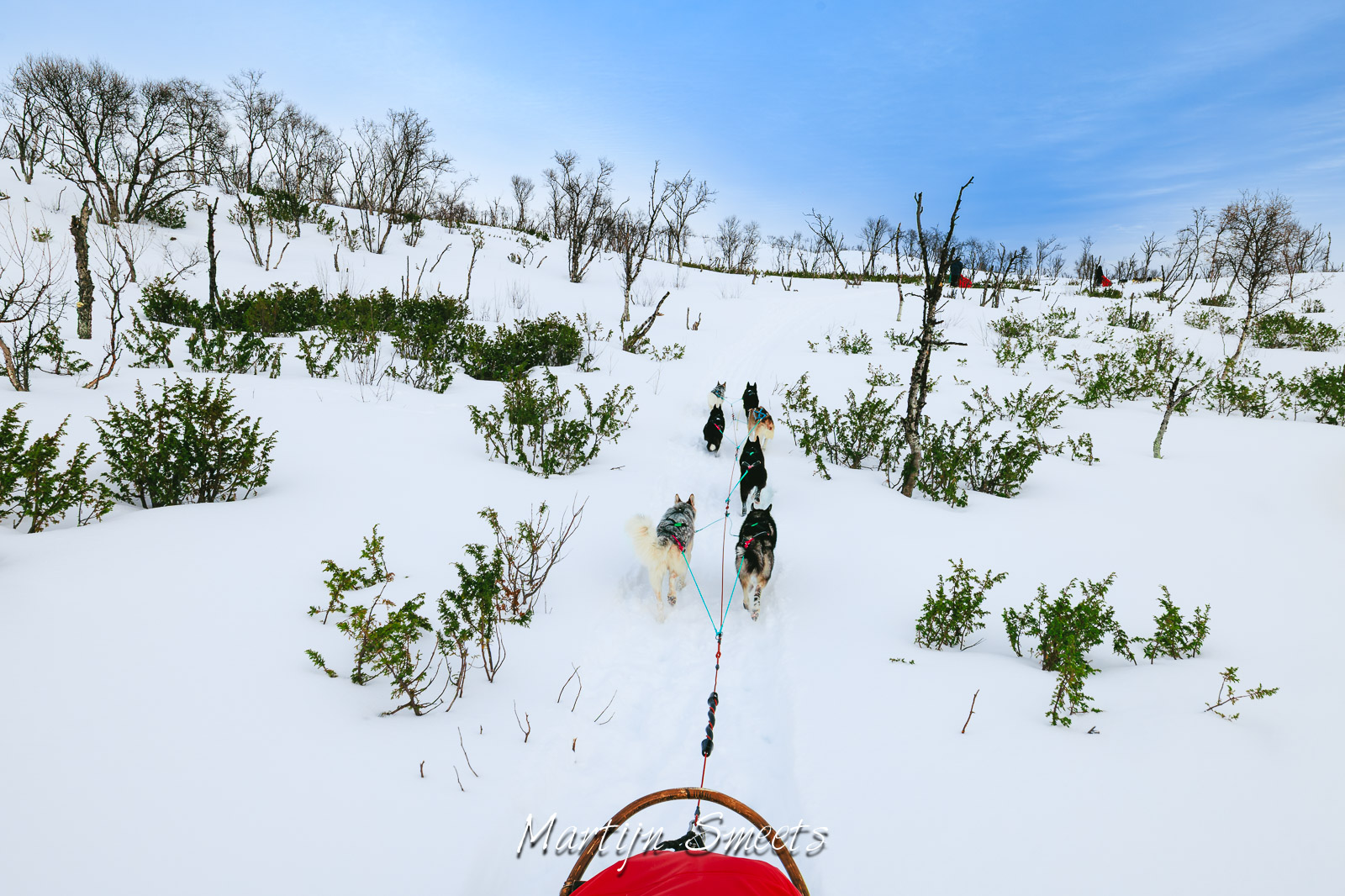
A bit later, Florian’s team ran into trouble. Pluto had been struggling for several days already and now started limping so badly that there was no option but to take him into the sled. After about 23 kilometers, we reached a steep uphill where Florian was visibly struggling to keep momentum while also holding Pluto down. Eventually, Jan had enough of Pluto’s distressed whining and decided to let him run in his own team for the remainder of the day.
Once we reached camp, Bjørn Tore’s brother came by to pick up Pluto and brought Dovre along to take his place. Jan walked Pluto away from the team in silence. There was no rush, no discussion. Watching them leave was an emotional moment, especially for Florian. Pluto had been part of the rhythm of our journey for weeks, and seeing him disappear from the line felt like losing one of our own.
After a short pause, duty returned. We also received two large pieces of horse meat as an emergency depot. The task that followed was simple but time-consuming: cutting the frozen blocks into portions for the dogs.


Day 21 — The Varanger Peninsula
Bergebyelva to Østervannet · 47.7 km
Today’s route carried us deeper onto Varangerhalvøya (the Varanger Peninsula). Once we entered Varanger National Park, we finally left the snowmobile tracks behind. The scars in the landscape disappeared, replaced by an uninterrupted palette of whites and pale blues, shaped by wind, snow, and light. Even after three weeks on the sled, the variation in landscapes continues to surprise me.

That gradual shift has been one of the most rewarding aspects of this journey. From the dramatic mountains of Troms, we moved into Sweden, where the slopes softened and the horizon widened. Then came the empty, rolling borderlands near Finland, followed by the vast openness of the Finnmarksvidda. After that, the route dipped back into river valleys and forests again. And now we find ourselves on the Arctic tundra of the Varangerhalvøya: open, exposed, and in winter almost completely empty, with only scattered birch forests tracing the folds of the valleys. Soon, we will reach the sea.
But first, there is still more of the peninsula to cross. About two-thirds into today’s route, we stopped for a long break in the sun, nearly forty minutes. I even drifted off for a short nap. A small joy.
Tonight, we’re camped near a cluster of cabins and snowmobiles. A stark contrast to the openness and silence we moved through during the day.

Day 22 — Everested
Østervannet to Skallelv · 34.1 km
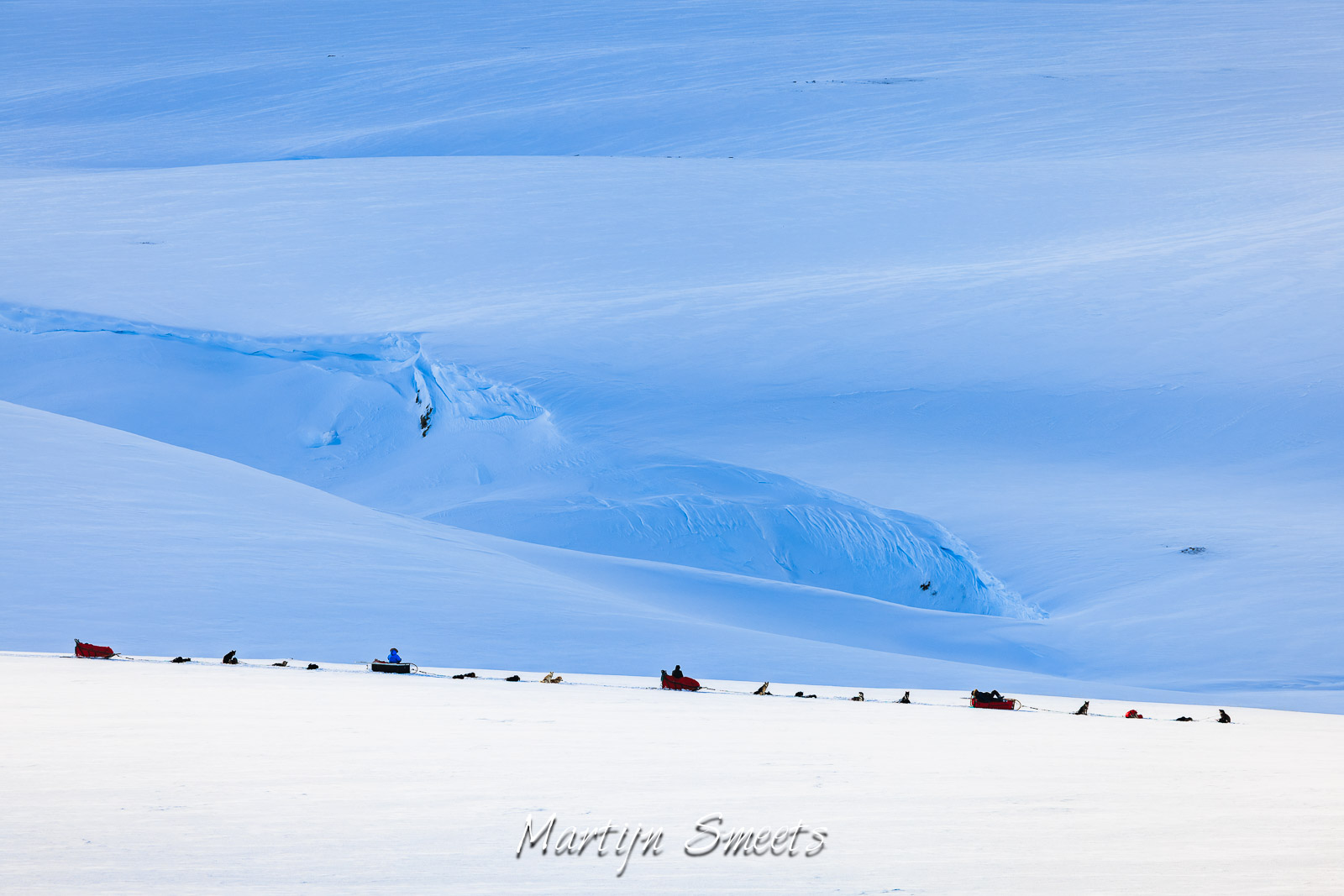
Today was a relatively short day on the sled, but a notable one. For the first time, we caught glimpses of the Barents Sea. Every now and then, while crossing the fells, a deep blue expanse appeared on the horizon. With every kilometer, our goal is now visibly closer.

We set up camp in a small river canyon near Skallelv. A few reindeer were roaming nearby, moving calmly through the landscape as if nothing remarkable was happening at all.
Later, in the tent, we went over the numbers of the journey so far. Distances covered, elevation gained, what still lay ahead. When everything was added up, it became clear that the dogs had already climbed more than 10,000 meters over the course of the expedition.
The dogs had Everested.
While pulling sleds.
Not everyone seemed impressed.
I was.


Day 23 — Beach sledding
Skallelv to Kiberg Strand · 29.6 km

We reached the sea.
Today, we drove our teams along the shoreline, sleds running over frozen sand and snow, with the Barents Sea beside us. After weeks of mountains, plateaus, rivers, and tundra, it felt almost unreal to be here.
Finding a suitable campsite took a little while. We needed a relatively sheltered spot, enough space for all the teams, and access to fresh water. In the end, we found a place that worked. Tonight, we are camping on the beach.


Day 24 — 1,000 Kilometers
Kiberg Strand to Persfjord · 21.2 km
We more or less slept in until 07:30, as the day ahead was meant to be relatively short. Still, the start took longer than planned. And, as it turned out, there was another peculiar incident waiting for us.
Just a few kilometers from camp, we were supposed to pick up an emergency dog-food depot along the road. Even with the horse meat, we were still running short. When we reached the agreed spot, confusion set in. There were no boxes by the roadside. We checked again, scanning the fresh layer of snow. Nothing. There was only one conclusion: the boxes had been taken. A rare thing to happen in this region. It meant waiting for Ane’s parents to drive out from Vardø with replacement supplies.
There was an upside, though. This exact location, barely one and a half kilometers into the day, also marked the moment we passed the 1,000-kilometer milestone of the expedition. With nothing to do but wait, we had plenty of time to celebrate the moment. There was whiskey, a group photo, and a few snow angels.

Once the replacement depot arrived and the sleds were loaded again, we set off without delay. Not long after, we passed an eagle’s nest and then followed about fifteen kilometers of snowmobile track through a beautiful stretch of landscape. We took a long, relaxed break beside an impressive canyon.
In Persfjord, we stayed in a small, cozy cabin right on the shore. The evening was spent finishing whatever remained: the last of the booze, the chocolate, and any stray sweets and snacks we could find.
On tonight’s menu, one of my absolute favorites: pasta bolognese with moose.

Day 25 — 25 Marathons
Persfjord to Vardø · 14.6 km
We had a cozy final morning in the small cabin in Persfjord. I enjoyed my very last oven shift of the tour, lying in my sleeping bag and staring into the crackling fire.

With less than two hours of driving planned, there was time for an unhurried start. We lingered over our morning coffee, and Florian and I stepped outside for a small photo session of me and Ala. Even though we weren’t at our final destination yet, there was never any doubt that she would lead my team for this last stretch as well. She had run the entire expedition and performed incredibly throughout. A high-five felt well deserved.
Not everyone was able to enjoy this final day as much. Isabel was the last in the group to be hit by the virus, and she had it the worst. Even so, we eventually got moving, carefully guiding the teams through the rocky terrain that marked the start of the route.\


After that, everything happened quickly. In less than two hours, we reached the entrance of the tunnel to Vardø. There were hugs and a quiet, understated sense of celebration, but mostly there was work to do. The sleds had to be unpacked, the dogs and all our gear loaded into trailers, before covering the final kilometers to Ane’s parents’ house by car.
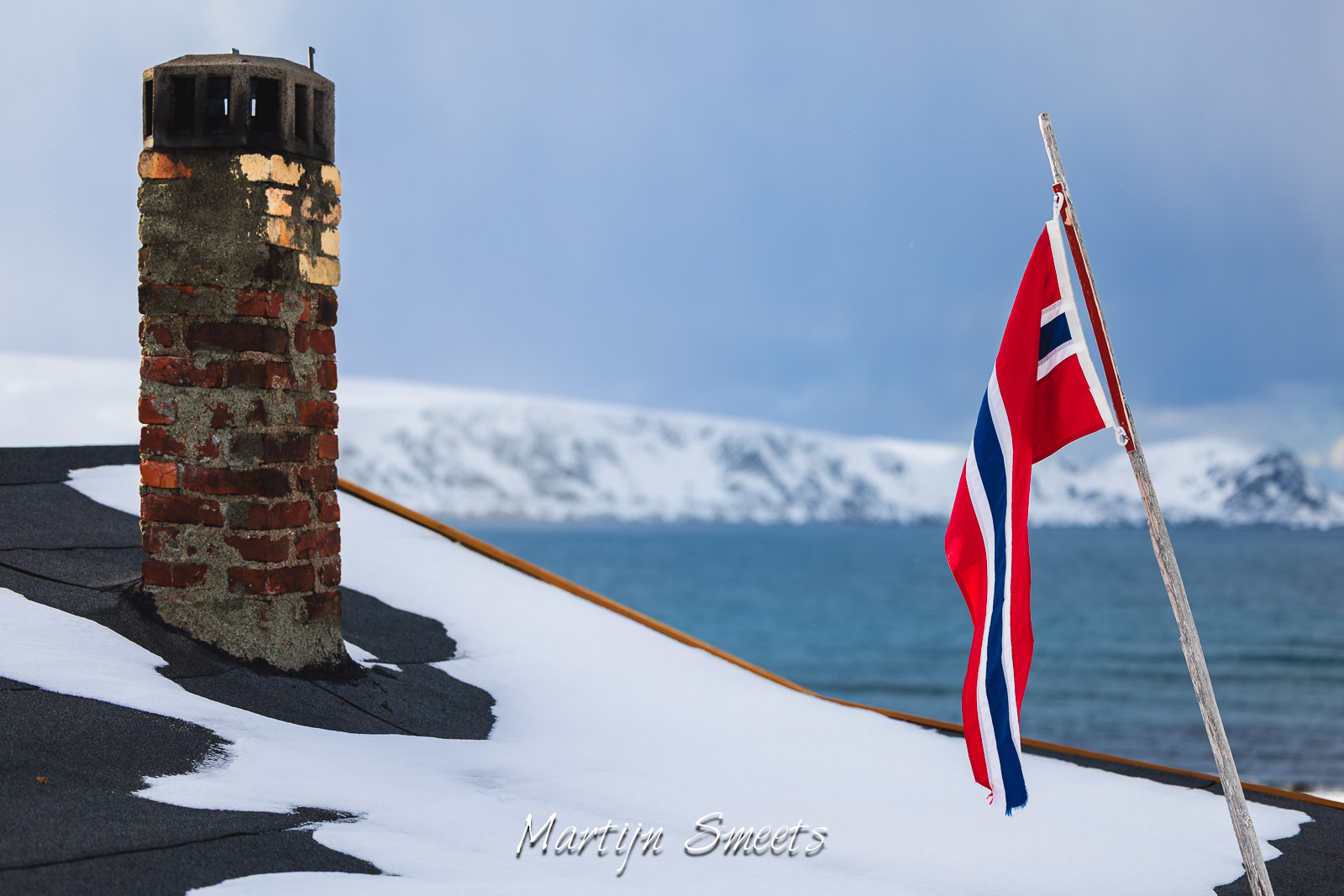
At the house in Vardø, one last surprise was waiting. Tillerot, whom we had left behind at the start of the expedition, was there. With six puppies. Welcome Teist, Tjeld, Alke, Terna, Lunde, and Lomvi. Their names are taken from birds that visit Hornøya, one of the North’s largest bird islands. From the living room in Vardø, we can see the island clearly. Tomorrow, we will likely go there to experience the bird life up close.
This was it. We had crossed northern Norway by dog sled.
The dogs pulled us for 1,035 kilometers.
That’s 25 marathons.

Vardø
After weeks on the trail, the final day of the program was spent in and around Vardø. Not as an endpoint to rush through, but as a place to slow down and let the journey settle. The warmth of Ane’s parents’ home, the sauna, the view from the living room toward the bird island Hornøya, and the occasional whale sightings just off the coast all contributed to that feeling.
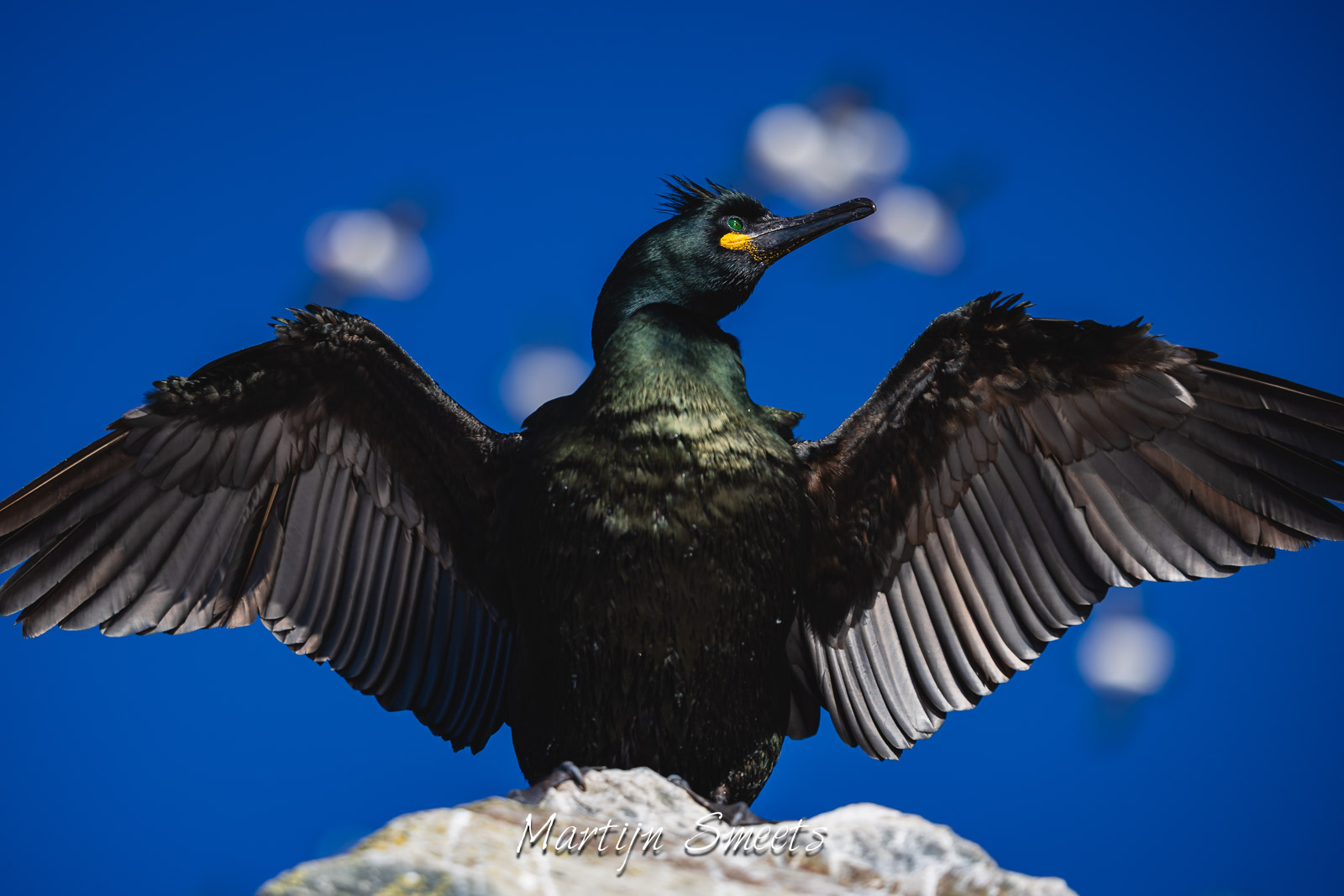
Everyone spent the day in their own way. For me, visiting Hornøya was without question a highlight. Thousands of seabirds nest on the island, filling the air with constant movement and sound. After weeks of white landscapes, silence, and the steady rhythm of the dogs, the sheer density of life was almost overwhelming. Suddenly, spring felt close.
Back in Vardø itself, there was time to wander along the harbor, look out over the Barents Sea, visit the powerful Steilneset Memorial, and enjoy one last restaurant dinner together. No sleds to pack. No routes to plan. Just the quiet satisfaction of having arrived, and the rare luxury of letting a journey end gently.
Vardø will forever have a place in my heart.




“I remember running to the sea.”
Interested in joining a multi-day dog sledding expedition? I can highly recommend Ursa Minor Adventures / Bardu Huskylodge. Besides being lovely people and outstanding guides, Jan and Ane provide the perfect example of how tourism and animal welfare can go hand in hand.