

Quite soon after my first trip to Greenland in 2020, I started making plans for the upcoming year. Since André and his s/v Mae West would still be in Greenland in 2021, I decided to join a trip further north. This time, we were able to enjoy the midnight sun period. We started off in Aasiaat and visited Disko Island, before continued further north through Uummannaq Bay towards the Upernavik Iceflow and ending in Upernavik.
In Aasiaat we used the first days to prepare the ship for the journey ahead. We filled the water tanks, stocked up on groceries and did some last repairs. I used the time for some photography in the village and the abandoned fish factory I got acquainted with last year. After four days, we used a nice southerly wind to sail from Aasiaat to Kroonprinses Ejland. From there we continued to Qeqertarsuaq, the village on the south end of Disko Island. From Disko Island we made a long stint towards Uummannaq Bay, where the landscape became truly spectacular.
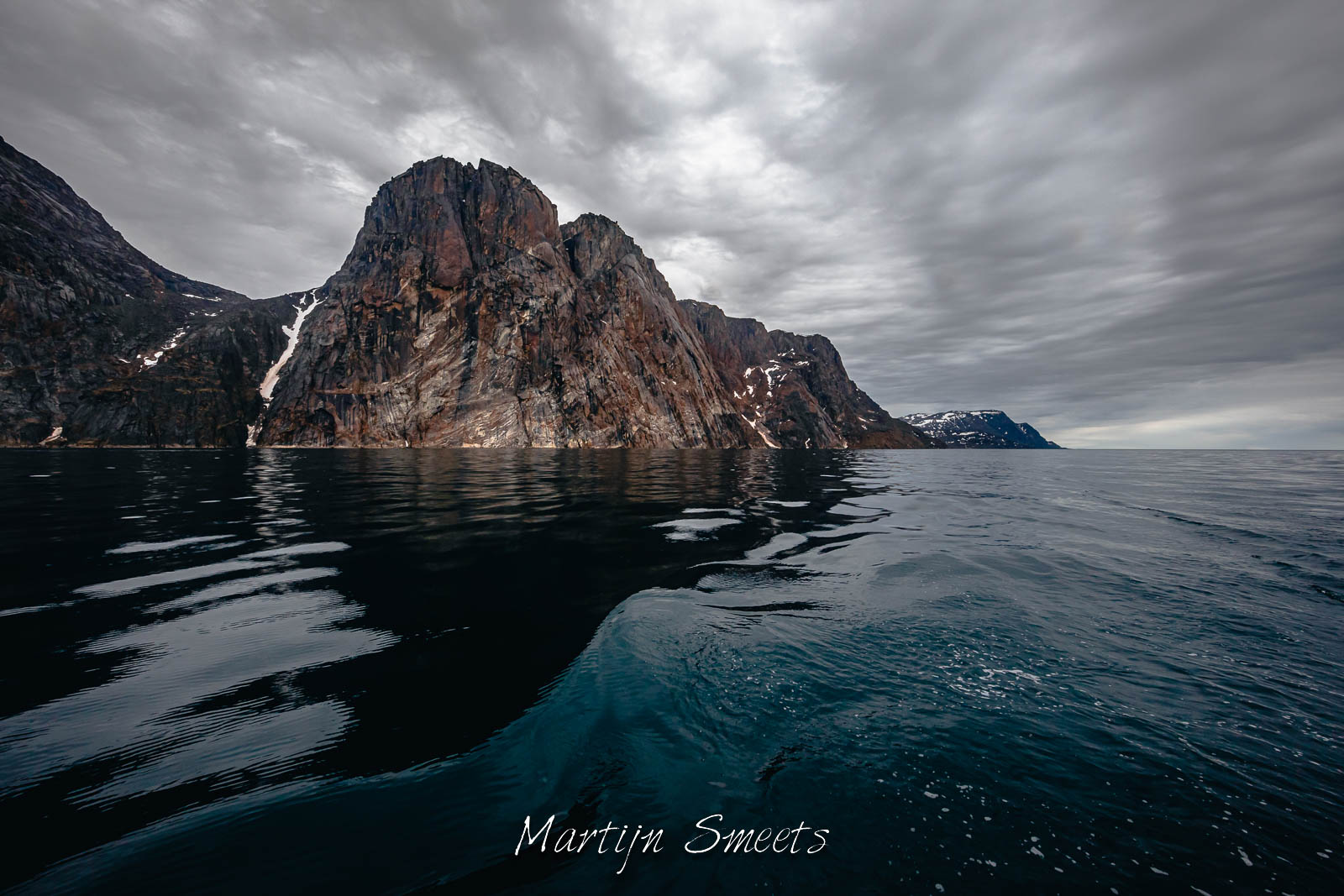


There’s a lot to share about this trip, but when it comes to stories, there are two experiences that really stand out.
Crossing the ice flow
The first real adventure took place during one of my watches. We were leaving the Uummannaq Bay from Illorsuit in the middle of the night. The rest of the crew was sound asleep. André and I talked it through before my shift. That night I would probably have to navigate through a dense ice flow from one of the nearby glaciers. As we were sailing, it was important for me to keep track of changing winds and the possible safe paths through the flow of icebergs. I could always use the engine as a backup, if necessary. André trusted me with the job and left me at the wheel.
An hour or so later I could clearly see the flow of blue-coloured mountains ahead. I was sailing the genoa, mainsail and misen on a northerly course with a pace of 5 to 6 knots. The wind was a stable half wind coming from the east. Closer to the icebergs I started anticipating possible routes, making sure I pass them upwind as much as possible. That way, I could avoid the smaller debris that drifts away from the icebergs, while also keeping the wind in the sails and retaining the required manoeuvrability if needed. If I wanted to take down any sails, this would be the time to do it. However, the visibility was good and I had confidence I would be able to find the right course through this minefield. For an hour or so I was concentrated to the fullest.
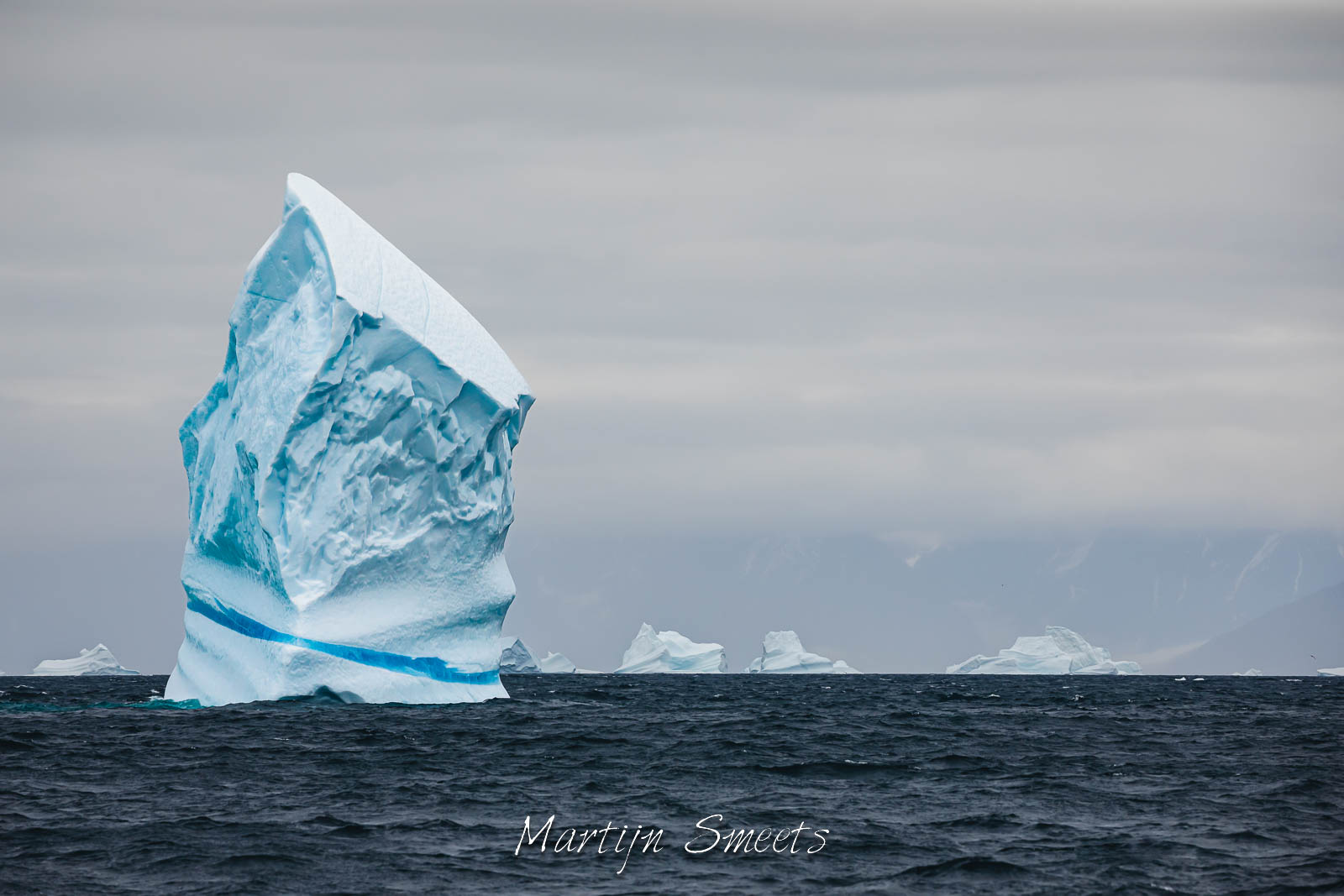
At one point I had to either take a big detour following the ice flow, or cross a narrow passage between two icebergs. I figured I could do the latter by by sailing close to the wind. The two icebergs were no more than 300 meters apart. It might not sound close, but considering that it actually feels like they are less than 100 meters apart and that they could have a so-called ‘foot’ just underneath the surface made it quite precarious. It would have only taken one error for the leeway to be gone.
Another hour later I was able to look back at the train of icebergs that was now behind us. I suddenly realised I had not taken a single picture of this adventure, even though my camera was within reach. This alone made it a rare moment for me. I quickly grabbed the camera to make sure I had a shot of the last iceberg we passed. I have many more interesting pictures of icebergs than this one, still it’s one of my most memorable and as such significant images for me personally.
New anchorage
From Uummannaq Bay we ventured further north towards the Upernavik glacier. The weather conditions for the next few days seemed good and stable. That made it possible to get all the way up to the ice flow itself. However, due to the retreating of the glaciers, a lot of these waters are completely uncharted and unpredictable. The upside is that there might also be new anchoring spots to be discovered.
André downloaded the most recent satellite image to search for interesting achoring spots. While scanning the glacier front, we found a small bay with a dead end of the glacier tongue. From above it looked like the most perfect sheltered bay. It seemed too good to be true. We set up a rough route towards the anchorage on the plotter, which it only displayed as ‘land’. We were curious to see how that would turn out.
Since these waters were uncharted and full of skerries, we traveled carefully on the engine and constantly checked our depth. I was behind the wheel the whole route. There were some extremely nerve-racking moments. At one point the depth jumped up from unreadable (>180 meters) to no more than 10 meters within seconds. We had to stall the ship on several occasions.
After about two hours we arrived at the bay. The scenics were amazing and the shore underneath the glacier actually proved to be ideal for the use of shorelines. The entry of the bay had a small bump of four to six meters with good protection against incoming ice. The depth within the bay was very stable. The anchoring was easy and we could soon after use the dinghy to attach shorelines to two big boulders. An hour later we enjoyed a small beer, while basking in the arctic summer sun. It was an extraordinary feeling to just be there: an anchorage we had discovered ourselves and where no one had anchored before.
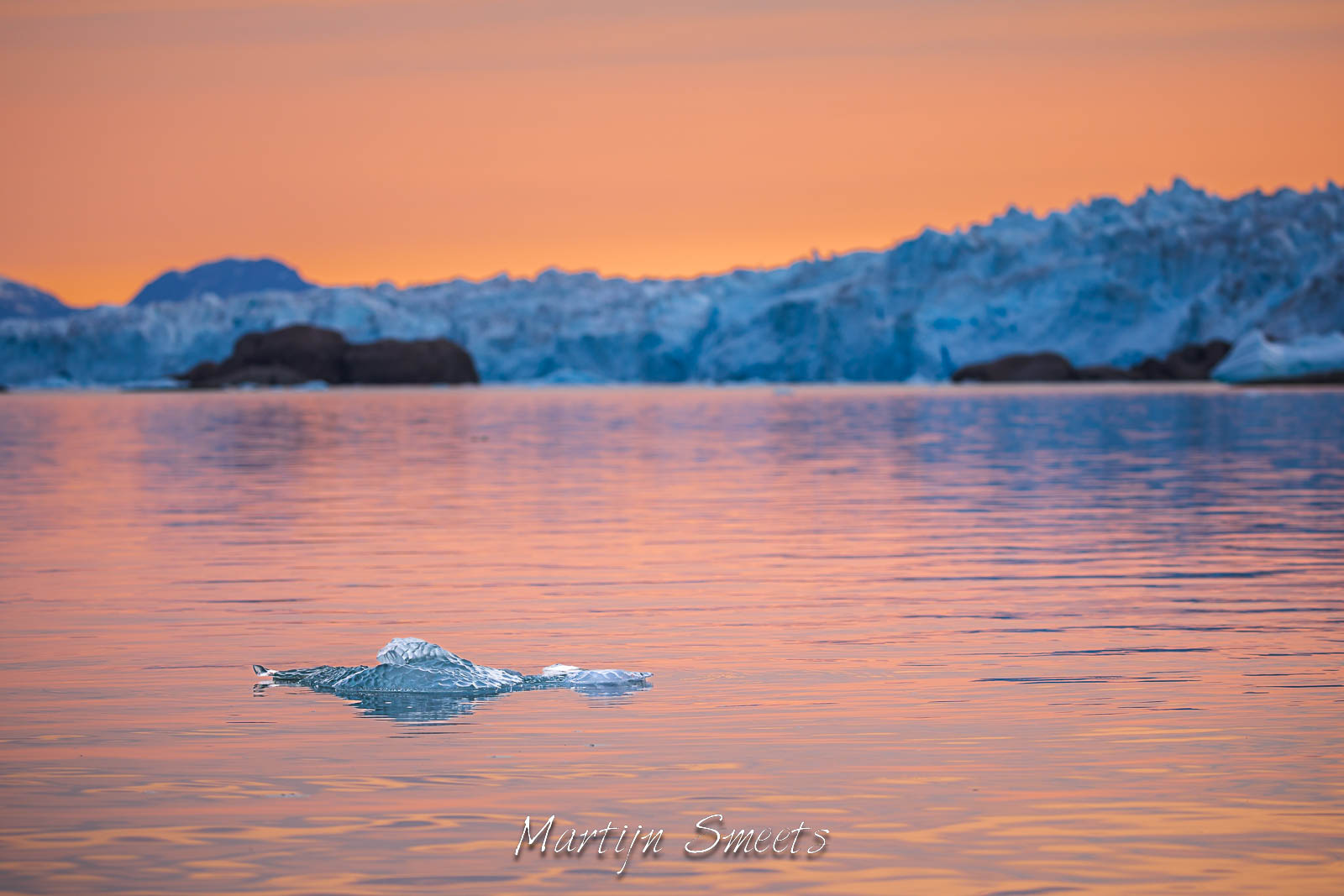


Every single time I look back at the pictures of this anchorage it brings a smile upon my face. It makes me feel humble and I realise what a privilege it is to experience things like this. It is without doubt one of my greatest experiences in life.
Visit the following link to see my photography portfolio of Disko Bay, Greenland.